Best CAT Study Material 2025 (Updated): PDF Free Download & Complete Guide

The CAT (Common Admission Test) is a crucial exam for MBA aspirants in India, it is a nation-wide conducted exam annually. The primary goal of this exam is to select candidates for admission into various management programs, especially MBA and to excel in this competitive exam, having the right cat study material is essential. We at Narayana Business School always ask the CAT aspirants to keep the imperative CAT prep tips in mind, which relate to understanding the syllabus thoroughly, always keeping mock tests handy and carefully analysing the shortfalls to improve them. 

This comprehensive article provides an in-depth guide to cat preparation, focusing on free resources, study plans, and proven strategies to ace the cat exam 2025. 

The first step in your preparation journey is to understand the CAT exam pattern thoroughly. The exam is divided into three main sections: Quantitative Aptitude (Quant), Logical Reasoning and Data Interpretation (LRDI), and Verbal Ability and Reading Comprehension (VARC). Each section contains different types of questions, making it crucial to have a structured study plan that addresses all areas comprehensively.    

The cat syllabus for 2025 remains consistent with previous years, covering: 

  • Quantitative Aptitude: Arithmetic, Algebra, Geometry, Number System, and Modern Math 
  • Data Interpretation & Logical Reasoning: Charts, Tables, Logical Puzzles, and Critical Reasoning 
  • Verbal Ability & Reading Comprehension: Grammar, Vocabulary, Para Jumbles, and Reading Comprehension 

Understanding this pattern helps you allocate time effectively and focus on areas that need the most attention during your cat preparation journey.

Looking for the best CAT study material for free? There are numerous online resources available that can significantly enhance your preparation without breaking the bank. Quality study materials include CAT books, CAT mock tests, CAT previous papers, Quant formula PDFs, CAT daily targets, sectional tests for each section, and revision videos to ensure thorough preparation.

Essential Free Resources for CAT Paper 2025   

  1. Previous Year Papers and Question Banks: The most valuable free study material comes in the form of previous year papers. These cat previous year papers provide insight into the exam format, difficulty level, and question patterns. You can find cat question papers from 2017 to 2024, complete with detailed solutions. 
  1. Topic-wise Practice Questions: For focused preparation, access cat question banks organized by topics. This allows you to practice specific areas like cat quant, cat varc, or DILR sections individually, helping you identify and strengthen weak areas. 
  1. Mock Tests and Sectional Tests: Regular cat mock tests are crucial for tracking your progress and building exam temperament. Many platforms offer free cat mock tests that simulate the actual exam environment. Additionally, cat sectional tests help you focus on individual sections and improve accuracy. 

Free PDF Download and PDF Resources  

Many educational platforms offer cat study material pdf resources that can be downloaded for offline study. These include: 

  • Formula sheets for quick revision 
  • Cat preparation books in PDF format 
  • Section-wise question compilations 
  • Cat study material 2025 updates with latest patterns 

The availability of pdf free download options makes quality preparation accessible to everyone, regardless of their financial constraints.

Download your free CAT study material for 2025 at Narayana Business School’s expert curated CAT content. 

Investing in the best cat preparation books can significantly enhance your study experience. Look for books that cover all sections of the cat exam comprehensively and include practice questions with detailed explanations.  

Recommended Books for Each Section

For Quantitative Aptitude: 

  • “How to Prepare for Quantitative Aptitude for CAT” by Arun Sharma 
  • “CAT Quantitative Aptitude” by Sarvesh Kumar Verma 
  • “Quantitative Aptitude for Competitive Examinations” by R.S. Aggarwal 

For VARC Section: 

  • “How to Prepare for Verbal Ability and Reading Comprehension” by Arun Sharma and Meenakshi Upadhyay 
  • “Word Power Made Easy” by Norman Lewis 
  • “High School English Grammar and Composition” by Wren & Martin 

For DILR Section: 

  • “How to Prepare for Data Interpretation for CAT” by Arun Sharma 
  • “Logical Reasoning and Data Interpretation for CAT” by Nishit Sinha 
  • “A Modern Approach to Logical Reasoning” by R.S. Aggarwal 

The best cat study material combines these books with online resources and practice tests to create a comprehensive preparation strategy. 

Regularly taking cat mock tests is essential for effective preparation. These tests serve multiple purposes in your cat exam study routine:

Benefits of Mock Tests

Exam Simulation: Mock tests replicate the actual cat exam environment, helping you manage time effectively and reduce exam anxiety. They familiarize you with the computer-based format and interface. 

Performance Analysis: After each mock test, analyze your performance to identify strengths and weaknesses. Focus on areas where you’re consistently making mistakes and adjust your study plan accordingly. 

Time Management: Learn to allocate time efficiently across sections. Practice switching between different types of questions and maintain your speed and accuracy throughout the test duration. 

Cat sectional tests allow you to focus on individual sections intensively. This approach helps you: 

  • Improve section-specific strategies 
  • Build stamina for each section 
  • Identify optimal question selection patterns 
  • Enhance accuracy in weaker areas 

Developing a robust preparation strategy is vital for success. Your approach should be systematic and cover all aspects of the cat syllabus effectively.  

Daily Study Routine and Targets

Creating cat daily targets helps maintain consistency and ensures comprehensive coverage of the syllabus. A typical daily routine should include: 

Morning Session (2-3 hours): Focus on your strongest section to build confidence

Afternoon Session (2-3 hours): Tackle your weakest section when your mind is fresh

Evening Session (1-2 hours): Practice mixed questions and take sectional tests Night Session (30 minutes): Review mistakes and revise key concepts 

Monthly Preparation Timeline 

Months 1-2: Foundation Building 

  • Complete basic concepts in all three sections 
  • Start with easier topics in each section 
  • Begin reading newspapers and magazines for VARC preparation 
  • Take diagnostic tests to identify baseline performance 

Months 3-4: Skill Development 

  • Progress to intermediate and advanced topics 
  • Increase the difficulty level of practice questions 
  • Start taking cat mock tests regularly 
  • Focus on accuracy improvement 

Months 5-6: Intensive Practice 

  • Take full-length mocks every alternate day 
  • Analyze performance and work on weak areas 
  • Revise important formulas and concepts 
  • Practice previous year papers extensively 

Section-wise Preparation Strategy 

  1. Quantitative Aptitude Preparation:  

CAT quantitative aptitude requires a strong foundation in basic mathematics.  

Focus on: 

  • Building speed in calculations 
  • Learning shortcut techniques 
  • Practicing different question types regularly 
  • Memorizing important formulas and theorems 

VARC Section Strategy:  

Success in cat varc depends heavily on reading habits and vocabulary: 

  • Read diverse content daily (newspapers, magazines, blogs) 
  • Practice para jumbles and sentence completion regularly 
  • Improve reading speed without compromising comprehension 
  • Build vocabulary through word lists and contextual reading 

DILR Section Approach:  

The DILR section requires analytical thinking and logical reasoning: 

  • Practice different types of data interpretation questions 
  • Work on logical reasoning puzzles regularly 
  • Develop quick calculation skills 
  • Learn to identify solvable sets in the actual exam 

Online cat preparation has gained tremendous popularity, offering flexibility and comprehensive resources. Many platforms provide extensive free resources including: 

Digital Learning Advantages

  • Flexibility: Study at your own pace and schedule  
  • Comprehensive Content: Access to video lectures, interactive tests, and study materials  
  • Performance Tracking: Detailed analytics of your preparation progress  
  • Regular Updates: Stay updated with latest exam patterns and questions 

Free Live Sessions and Webinars 

Many coaching institutes offer free live sessions covering important topics, exam strategies, and doubt resolution. These sessions provide: 

  • Expert guidance from experienced faculty 
  • Real-time doubt clarification 
  • Strategy discussions with fellow aspirants 
  • Motivation and exam tips 

While focusing on cat preparation, it’s important to consider the broader MBA admission process:

Post-CAT Preparation

  • CAT Score Analysis: Understanding your cat score and its implications for different business schools  
  • Application Process: Preparing for Written Ability Tests (WAT) and Group Discussions (GD)  
  • Interview Preparation: Building confidence for personal interviews  
  • Profile Building: Enhancing your overall candidacy beyond test scores 

Alternative Exams 

Consider preparing for other management entrance exams alongside CAT: 

  • XAT (Xavier Aptitude Test) 
  • CMAT (Common Management Admission Test) 
  • SNAP (Symbiosis National Aptitude Test) 
  • IIFT (Indian Institute of Foreign Trade) exam 
  • MAT (Management Aptitude Test)

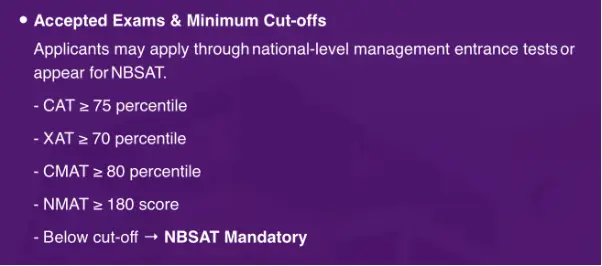
For 2026 admissions in MBA & PGDM programs, Narayana business school is accepting CMAT, NMAT, XAT and its own NBSAT scores other than CAT scores. Explore all programs.  

To appear for cat with confidence, implement these advanced techniques:

Question Selection Strategy 

During the actual exam, smart question selection can make a significant difference: 

  • Identify easy questions first in each section 
  • Skip difficult questions that consume too much time 
  • Maintain accuracy over attempting more questions 
  • Use the process of elimination effectively

Stress Management and Exam Day Strategy 

  • Mental Preparation: Develop a positive mindset and manage exam anxiety  
  • Time Management: Practice strict time allocation for each section  
  • Revision Strategy: Create concise notes for last-minute revision  
  • Health Maintenance: Maintain physical and mental health throughout preparation

Modern cat exam study approaches incorporate various technological tools:

Mobile Apps and Online Platforms 

Use mobile applications for: 

  • Daily practice questions 
  • Formula quick reference 
  • Mock test attempts 
  • Performance tracking 
  • Offline study material access 

Analytics and Performance Tracking 

Utilize data analytics to: 

  • Identify improvement areas 
  • Track progress over time 
  • Compare performance with peers 
  • Optimize study strategies 

Successful cat preparation often involves building a strong support network:

Study Groups and Forums

Join online communities and study groups to: 

  • Share resources and strategies 
  • Discuss difficult concepts 
  • Stay motivated throughout the journey 
  • Get diverse perspectives on problems 

Mentorship and Guidance 

Seek guidance from: 

  • Previous CAT toppers 
  • Current MBA students 
  • Experienced faculty members 
  • Professional mentors 

As you approach the exam date, focus on:

Intensive Revision

  • Review all important formulas and concepts 
  • Practice previous year papers under timed conditions 
  • Take final mock tests to maintain exam readiness 
  • Focus on mental preparation and stress management 

Last-Minute Strategy 

  • Avoid learning new concepts close to the exam 
  • Maintain your regular study routine 
  • Ensure proper rest and nutrition 
  • Prepare all necessary documents and logistics 

Effective cat preparation requires a combination of quality study materials, consistent practice, and strategic planning. By leveraging free cat study material, maintaining disciplined daily targets, and following a comprehensive preparation strategy, you can significantly increase your chances of achieving your desired CAT score. 

Remember that success in the CAT exam opens doors to prestigious business schools and transforms your career trajectory. The investment in quality cat study material 2025 and dedicated preparation will yield long-term benefits in your professional journey. 

Whether you choose free study material or invest in premium resources, the key is consistency, practice, and maintaining a positive attitude throughout your cat exam preparation journey. Start early, stay focused, and approach the exam with confidence. Your dream MBA program awaits! 

Good luck on your preparation journey toward cracking the CAT 2025 and securing admission to your preferred business school! 

Role Of Youth In Nation Building: Shaping The Future Of Rising India

India is one of the youngest nations in the world, with more than 65% of its population under the age of 35. This demographic structure presents both a challenge and an opportunity. Harnessing this youthful energy, intellect, and creativity can be the turning point in accelerating national development. 

The role of youth in nation-building goes beyond mere participation; it’s about leadership, innovation, and transformation. In India’s journey toward becoming a developed and self-reliant nation, the younger generation holds the power to shape policies, change narratives, and drive inclusive growth. 

Let’s explore the core ways youth play a critical role in building the nation.

The role of youth in nation-building is to actively contribute to a country’s progress through leadership, innovation, and social responsibility. In India, where over 65% of the population is under 35, young people play a vital part in driving economic growth, promoting social harmony, embracing technology, and addressing local and global challenges.   

Energy & Enthusiasm 

The most defining trait of young people is their boundless energy and enthusiasm. The youth in nation building act as a vital force when channelled productively. Whether it’s volunteering, joining public service, or participating in social movements, this dynamic energy creates momentum that drives change. 

Innovative Ideas 

Today’s innovator is likely to be a 24-year-old who knows how to start a startup in India, an app, or a grassroots solution to a local problem. With increased access to technology, education, and digital literacy, Indian youth are bringing fresh perspectives and novel approaches to tackle age-old challenges in health, agriculture, education, and governance. 

Agents of Change 

The role of youths in transforming society is not new. From the Indian independence movement to present-day social reform, youth have consistently taken up the mantle of change. Whether raising awareness about gender equality, organizing climate strikes, or fighting corruption, the youth can contribute significantly to building a just and equitable society. 

Young people contribute to the economic growth of a nation both as a workforce and as entrepreneurs. In India, where unemployment remains a significant issue, initiatives that promote skill development, youth empowerment, and self-employment are critical. Youth has the power to build businesses, generate employment, and strengthen the economy from the ground up.

So how exactly can the youth help shape the future of India? Let’s look at specific and practical areas where their involvement is vital. 

Education & Skill Development  

Education remains the strongest foundation for any developed nation. Equipping the youth of India with new skills, life skills, and vocational training ensures that they’re not just job seekers but job creators. Programs like Skill India, PMKVY, and NEP 2020 aim to empower young people to compete in a globalized world. 

Skill development also enhances productivity, reduces unemployment, and enables young individuals to find meaningful work that contributes to the national development of India to its full potential. 

Promoting Social Harmony  

The role of youth in nation also involves bridging gaps in society. Youth can fight divisive ideologies and promote gender equality, communal peace, and inclusivity. Through community service, peace-building efforts, and campaigns promoting equality, they can strengthen the social fabric of India.

Combating Social Evils 

From dowry and child marriage to caste discrimination and corruption, social evils continue to plague Indian society. Young people bring a progressive mindset and are often more willing to challenge outdated traditions. They can drive transformation by raising awareness, reporting abuses, and promoting justice through both online and offline platforms. 

Participating in Politics and Governance

Active participation in governance isn’t limited to voting every five years. The youth play a key role by joining local government, becoming policy advisors, engaging in civic forums, and starting grassroots movements. Initiatives like Youth Parliament and student councils help enable youth to engage with political processes early on.

To truly realize democracy, Indian youth must take part in the decision-making processes that affect their future. 

Environmental Conservation

With climate change threatening our future, youth in nation building must also take on the role of environmental stewards. Indian youth are at the forefront of eco-initiatives, planting trees, reducing plastic use, promoting clean energy, and supporting wildlife conservation. Green campuses and community-led conservation projects showcase how young voices are making a difference.

Become Entrepreneurs

Entrepreneurship is a key lever in fighting unemployment and achieving economic growth. Indian startups, many led by youth — are disrupting markets, generating jobs, and solving pressing problems. Government support through Startup India, Atal Innovation Mission, and incubator grants helps youth empower themselves while contributing to the national economy. 

An innovator at heart, an Indian youth entrepreneur represents ambition, risk-taking, and forward-thinking, all crucial traits for nation-building. 

Contributing to Rural Development

While urban centres are rapidly developing, the soul of India still lives in its villages. Young people working in rural development can bring clean water, better education, and digital access to remote areas. Programs like Unnat Bharat Abhiyan and village internships help youth engage with rural India and work on real-world problems.

Such social work ensures that progress reaches all corners of the country and not just urban elites. 

Promoting Digital India 

As India moves toward a tech-driven economy, youth are central to realizing the vision of Digital India. They promote digital literacy, create tech solutions for governance, and increase access to information. Whether building apps for agriculture, teaching coding to school kids, or working in e-governance, youth are the digital architects of tomorrow.

Having a legacy of 25 years, Narayana Business School (NBS) has been more than an academic institution, it has been a platform for preparing India’s youth to take an active role in shaping the country’s future. Founded by first-generation edupreneurs, Dr. Purvi and Dr. Amit Gupta, NBS began as a small CFA coaching class in Ahmedabad and has grown into one of India’s fastest-growing B-schools. Its mission aligns closely with the nation-building agenda: to transform ambitious young minds into skilled professionals, ethical leaders, and responsible citizens.  

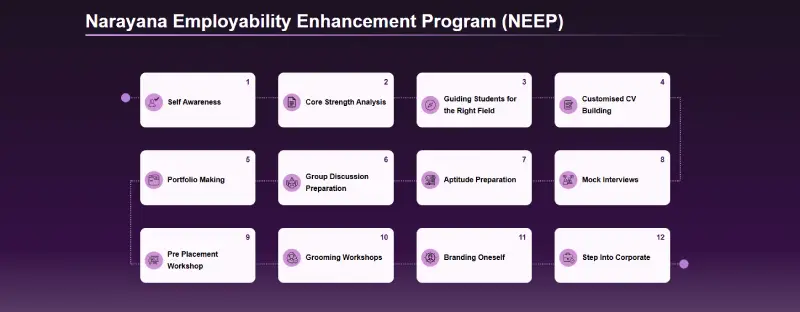
The institution’s approach to education mirrors the needs of a developing nation, blending academic rigor with experiential learning. It offers academic programs which are a powerful blend of industry and academia delivery. Through industry collaborations with EY, NISM, eChai Ventures, and others, students gain direct exposure to real business challenges. Initiatives like the Narayana Employment Enhancement Program (NEEP), leadership labs, case battles, and mock boardrooms prepare graduates to hit the ground running as middle managers, innovators, and entrepreneurs.  

Despite their potential, Indian youth face several challenges that hinder their full participation in nation-building.  

  • Unemployment: Lack of job opportunities and mismatch between education and industry needs remains a critical barrier. 
  • Mental Health: Pressure from academics, job insecurity, and social media overload are contributing to rising mental health issues. 
  • Lack of Representation: Young voices are still underrepresented in policy-making, media, and corporate leadership. 
  • Gender Bias: Women and non-binary youth face systemic challenges that limit their public and economic participation. 
  • Limited Civic Education: Many youths are unaware of how to take part in political and civic activities meaningfully. 

To overcome these, a multi-pronged approach is needed:

  • Policy Reforms: Implement youth-friendly policies, such as youth quotas in politics and inclusive employment schemes. 
  • Education Revamp: Update curriculums to include life skills, emotional intelligence, and digital fluency. 
  • Funding & Mentorship: Create more platforms for young entrepreneurs and leaders to thrive. 
  • Awareness Campaigns: Help youth understand their rights, civic duties, and the avenues available for active participation in governance. 
  • Mental Health Support: Increase access to counselling and helplines in schools, colleges, and workplaces. 

There is no shortage of inspiring examples showcasing the role of youths in shaping India’s future:  

  • Kiran Mazumdar-Shaw started Biocon in her 20s and turned it into a global biotech giant. 
  • Ritesh Agarwal, founder of OYO Rooms, revolutionized the hospitality industry at the age of 25
  • Disha Ravi, a young climate activist, brought attention to India’s environmental issues on the global stage. 
  • Srinivas BV, national president of the Indian Youth Congress, led several COVID-19 relief efforts when systems were overwhelmed. 
  • Thousands of student volunteers from NSS, NCC, and other institutions engage in community service, health camps, and awareness drives every year. 

These stories highlight that writing an essay about the youth is not enough, real-life action is already happening and growing.

1. What is the role of youth in nation development? 

The youth drive nation development through innovation, leadership, and social responsibility. Their energy and ideas fuel economic growth, promote social harmony, and address societal challenges, making them essential to building a strong, inclusive, and progressive nation. 

2. In what ways can youth practically contribute to national development? 

Youth can contribute by starting businesses, joining public service, promoting digital literacy, volunteering, engaging in governance, leading environmental initiatives, and working on rural development. These actions strengthen the economy, society, and infrastructure. 

3. What is the role of youth in building smart India? 

Youth are key to building Smart India by driving digital transformation, creating tech solutions, promoting sustainability, and ensuring inclusive growth through innovation, entrepreneurship, and community engagement. 

4. Why is youth empowerment essential for sustainable development and economic growth? 

Empowered and well-educated youth create jobs, innovate solutions, and address social issues. By enhancing skills, fostering leadership, and encouraging participation, youth empowerment ensures sustained economic growth and progress toward global development goals. 

5. How can educational institutions like Narayana Business School contribute to youth-led nation-building? 

Narayana Business School empowers youth through industry-aligned programs, experiential learning, leadership training, and community projects. It develops skilled, ethical, and innovative professionals ready to impact India’s economy and society. 

The role of youth in nation-building cannot be overstated. They are not just the leaders of tomorrow but the changemakers of today. Through education, innovation, political involvement, entrepreneurship, and community service, the youth can transform India into a just, equitable, and prosperous nation. 

But to achieve this, the government, civil society, and private sector must invest in the youth, empower them, trust them, and enable youth participation at all levels. 

NBS Ahmedabad promotes the values essential to social harmony and ethical growth. Students are encouraged to engage in community-driven initiatives, such as partnering with NGOs, supporting environmental campaigns, and contributing to local development projects. From digital literacy drives to sustainability projects, the focus is on applying knowledge for societal benefit.  

As India advances toward its vision of becoming a $5 trillion economy, institutions like Narayana Business School stand at the forefront, empowering the youth who will drive that transformation.  

As we leverage our demographic dividend, let’s remember, the future of India lies in the hands of its young citizens. With the right initiative, mentorship, and opportunities, Indian youth will lead the way in redefining nation-building for the 21st century.   

How To Start A Startup In India Successfully Step-By-Step Guide (2025) 

Starting a startup in India in 2025 can be a rewarding yet challenging venture. With a vibrant ecosystem that encourages entrepreneurship, the Indian market is ripe with opportunities for aspiring entrepreneurs. This step-by-step guide will walk you through the essential elements required to establish a successful startup, from understanding the entrepreneurial landscape to navigating registration and funding options. 

To effectively start a startup in India, it is crucial to grasp the definition of a startup. A startup is essentially a young company founded to develop a unique product or service and bring it to market. These entities are often characterized by their focus on innovation, scalability, and problem-solving capabilities. They span various sectors, including technology, healthcare, e-commerce, and education.  

In India, startups must aim to address existing societal challenges through inventive solutions, which may involve creating entirely new products or significantly enhancing existing services. 

Definition of a Startup 

The definition of a startup extends beyond just being a new business; it encapsulates the essence of innovation and disruption. Startups thrive on the premise of developing a product or service that stands out in the marketplace. This involves rigorous research and a well-thought-out business plan that outlines the unique selling proposition. Entrepreneurs looking to start a startup in India should focus on identifying their target audience and understanding market needs, thereby ensuring their offerings resonate with potential customers. 

Importance of Startups for India’s Economy 

Startups play a pivotal role in shaping India’s economy by creating jobs, fostering innovation, and contributing significantly to GDP growth. As of 2022, startups accounted for about 2.64% of employment in the Indian market, highlighting their importance. The government of India has recognized this potential and launched various initiatives, such as the Startup India scheme, to support startup growth through funding, mentorship, and favorable policies. This ecosystem has propelled India into the ranks of top global leaders in innovation and entrepreneurship. 

Overview of Startup Ecosystem in India 

The Indian startup ecosystem has experienced exponential growth, with over 65,000 startups registered as of March 2022. India ranks third globally in the number of unicorns—privately held startups valued at over $1 billion—making it a hotbed for entrepreneurial activities. The government has taken significant steps to enhance this environment, including the Startup India initiative, which provides essential resources such as mentorship, funding opportunities, and tax exemptions to encourage budding entrepreneurs. Understanding this ecosystem is vital for anyone looking to start a successful startup in India. 

Identifying Your Business Idea 

Identifying a viable business idea is the cornerstone of starting a startup in India. This process requires a keen understanding of market needs and consumer preferences, which can be achieved through thorough market research. Entrepreneurs should aim to solve specific problems or enhance existing solutions, ensuring their product or service stands out. Innovative concepts can emerge from analyzing consumer behavior, and understanding the target audience is vital for generating unique business ideas that resonate with potential customers. 

Conducting Market Research 

Conducting market research is a crucial step to validate the feasibility of your startup idea. This involves gathering comprehensive data about potential customers, competitors, and overarching market trends. Entrepreneurs should employ various methods, such as surveys, interviews, and detailed data analysis, to assess consumer demand and pinpoint gaps in the market. By refining the business idea based on these insights, startups can develop strategies that align closely with consumer needs, significantly increasing their chances of success in the competitive Indian startup ecosystem. 

Creating a Business Plan 

A comprehensive business plan is essential for outlining the vision, mission, and operational framework of your startup. It should encapsulate critical details about the business model, market analysis, and marketing strategies, along with realistic financial projections. Crafting a well-structured business plan serves as a roadmap for growth, helping entrepreneurs navigate the complexities of starting a business in India. Additionally, a solid business plan is crucial for attracting investors and securing funding, so it’s important to revisit and update it regularly in response to market changes. 

Choosing the Right Business Structure 

types of business ownership

Choosing the appropriate business structure is vital for legal and operational efficiency when you decide to start a startup in India. Entrepreneurs can opt for various structures, including sole proprietorships, partnerships, limited liability partnerships (LLPs), and private limited companies. Each structure presents unique advantages and drawbacks concerning taxation, liability, and compliance requirements. It’s essential to consider factors like control, investment needs, and long-term goals to select the business structure that aligns best with your startup’s vision. 

Incorporate Your Business in India 

incorporate your business with registrar of companies

Incorporating a business in India involves registering your company with the Registrar of Companies (ROC) and obtaining a Certificate of Incorporation. Entrepreneurs must prepare and submit necessary documentation, including the Memorandum and Articles of Association, along with applicable registration fees. The incorporation process varies based on the chosen business structure, and it legitimizes when you register your business while opening doors to various government benefits and funding opportunities. Proper incorporation is a foundational step for any entrepreneur looking to establish a strong startup company in India. 

Startup Registration Process 

startup registration process

To take advantage of the Startup India initiative, entrepreneurs must register their startup by creating a profile on the Startup India website. This involves providing detailed information about the nature of the startup, its business model, and its developmental stage. Once registered, startups can access a myriad of benefits, including funding opportunities, mentorship programs, and various government schemes. The startup registration process is designed to be accessible and user-friendly, allowing aspiring entrepreneurs to navigate it easily and begin their journey in the Indian startup ecosystem. 

Understanding Regulatory Requirements 

Every startup in India must comply with specific regulatory requirements that are vital for legal operation. This compliance entails obtaining the necessary licenses, permits, and registrations tailored to the industry and type of business activities. Failing to understand these requirements can lead to significant legal issues, hampering the growth of your startup. Entrepreneurs are encouraged to consult with legal experts who specialize in regulatory compliance to navigate these complexities effectively, ensuring smooth operations and adherence to the law. 

Common Licenses Needed for Startups 

common licenses needed for startups

Startups in India commonly require several licenses to operate legally, including Goods and Services Tax (GST) registration, trade licenses, and other permits specific to their business type. For example, food-related businesses must obtain an FSSAI license, whereas manufacturing units need a manufacturing license. Each industry has a unique set of regulatory requirements that must be fulfilled before launching operations. Entrepreneurs should conduct careful research to identify and secure all necessary licenses to ensure their startup can function without legal hindrances. 

How To Obtain Required Permits 

To obtain the necessary permits for your startup, you must submit applications to the relevant government authorities, accompanied by the required documentation. The process for obtaining permits can vary significantly, depending on the type of business and specific permits needed. It is advisable for entrepreneurs to maintain meticulous records and keep track of their application statuses. Engaging professionals who specialize in regulatory compliance can expedite the permit acquisition process, ensuring that all legal requirements are met efficiently, allowing the startup to launch on schedule. 

Funding Options for Startups in India 

Startups in India have access to a diverse array of funding options, including bootstrapping, angel investors, venture capital, crowdfunding, and government schemes like the Startup India Seed Fund Scheme. Each funding source presents its own set of advantages and conditions that entrepreneurs should carefully evaluate based on their funding needs and business model. Networking with potential investors and participating in pitch events can enhance funding opportunities, enabling startups to secure the necessary financial support for growth and sustainability. 

How to Start a Business in India with No Money 

Starting a business in India with minimal or no funds is achievable through low-cost business models such as freelancing, dropshipping, or offering online services. Additionally, entrepreneurs can seek financial support from family and friends or consider crowdfunding as a viable option for raising initial capital. Various government schemes provide financial assistance to startups, which can be instrumental in kickstarting a business. A strong emphasis on cost management and resource optimization is vital to ensure success in such scenarios, allowing entrepreneurs to thrive even without significant capital. 

Managing Startup Costs Effectively 

Effective cost management is paramount for the sustainability of any startup. Entrepreneurs should create a detailed budget that outlines all expected expenses and revenue projections, enabling informed financial decisions. By identifying fixed and variable costs, startups can better navigate their financial landscape. Utilizing technology and automation can significantly reduce operational costs, while regularly reviewing financial performance allows for timely adjustments. This proactive approach to managing costs supports the financial health of the startup, ensuring alignment with growth objectives and long-term viability. 

Overview of Startup India Initiative 

startup india

The Startup India initiative, launched by the Government of India, aims to promote and facilitate the growth of startups across the country. This initiative offers various benefits, including tax exemptions, funding support, and access to mentorship programs. By creating a conducive environment for startups to thrive, it encourages innovation and entrepreneurship among aspiring entrepreneurs. Through this initiative, startups can avail themselves of numerous resources and support systems that significantly enhance their business prospects and contribute to the overall growth of the Indian startup ecosystem. 

Benefits of Government Schemes for Startups 

Government schemes for startups provide numerous benefits that can significantly impact an entrepreneur’s journey. These include financial assistance, tax breaks, and simplified regulatory processes that ease the burden on new businesses. Startups recognized under the Startup India initiative can enjoy a three-year tax exemption and gain access to the Fund of Funds for Startups, which provides essential capital to venture funds. Moreover, the ability to self-certify under labor laws reduces compliance burdens, allowing startups to focus on scaling their operations without being hindered by excessive regulatory challenges. 

How To Leverage DPIIT Recognition 

Obtaining recognition from the Department for Promotion of Industry and Internal Trade (DPIIT) is a crucial step for startups seeking to leverage the benefits of the Startup India initiative. This recognition allows startups to access various advantages, including easier compliance with regulations, tax exemptions, and support for intellectual property rights.  

Entrepreneurs can apply for DPIIT recognition through the Startup India portal, where they must submit relevant documents detailing their business. Once recognized, startups can utilize their status to attract investors and enhance their credibility in the competitive market, thereby facilitating their growth trajectory. 

Common Challenges Faced By Startups 

Startups in India face a multitude of challenges that can hinder their growth and sustainability. One of the primary challenges is securing adequate funding, as investors often view startups as high-risk ventures. Additionally, navigating regulatory hurdles can be complex and time-consuming, which may overwhelm new entrepreneurs. Intense market competition further complicates the landscape, as startups strive to establish a strong presence amidst established players.  

Moreover, attracting and retaining skilled talent remains a significant hurdle, making it essential for entrepreneurs to devise effective strategies to overcome these challenges and succeed in their entrepreneurial endeavors. 

Tips For A Successful Startup Journey 

To enhance their chances of success, entrepreneurs should focus on addressing real customer problems and remain adaptable to evolving market conditions. Continuous learning about industry trends and maintaining a flexible approach can significantly contribute to a startup’s longevity. Building a robust network of connections with fellow entrepreneurs, mentors, and investors provides valuable insights and opportunities that can propel growth.

Furthermore, maintaining financial discipline and regularly assessing business performance are crucial for sustainability, while embracing innovation and being open to constructive feedback can drive improvement in products and services. 

Resources For Aspiring Entrepreneurs 

A wealth of resources is available for aspiring entrepreneurs aiming to start a business in India, including online courses, startup incubators, and government programs. Websites like Startup India serve as comprehensive platforms offering information on funding options, regulatory requirements, and mentorship opportunities. Networking events and workshops provide additional avenues for learning and connections. Furthermore, accessing funding guides and market research reports equips entrepreneurs with the necessary knowledge to make informed decisions as they embark on their startup journey, ultimately paving the way for a successful startup in the Indian market. 

Social Media Addiction: Recognizing Signs And Tackling Problematic Use 

In our increasingly interconnected world, social media platforms have become an integral part of daily life. However, with this rise in usage comes the risk of social media addiction. Understanding and recognizing the signs of this behavioral addiction is crucial for maintaining mental health and fostering healthier relationships with digital media. This carefully put article delves into the nature of social media addiction, impact of social media on students at large, its common signs, and the latest research trends, aiming to shed light on this pressing issue. 

What Is Social Media Addiction? 

Social media addiction is characterized by an overwhelming compulsion to engage with social media platforms, leading to significant time investment and emotional dependence. This addiction is classified as a behavioral addiction, where individuals often prioritize social media use over other essential activities, ultimately affecting their daily lives and relationships. Symptoms of this addiction may include a persistent urge to check social media accounts, prolonged periods spent on social media each day, and withdrawal symptoms when individuals are unable to access these platforms.  

A 2019 survey highlighted that 40% of young adults in the U.S. felt addicted to social media, a statistic that emphasizes the prevalence and importance of understanding its addictive nature for mental health and overall well-being. 

Common Signs Of Addiction To Social Media 

Identifying common signs of addiction to social media is essential for early intervention. Individuals may exhibit compulsive checking of their social media accounts, spending excessive time on these platforms rather than engaging in offline activities. Mood changes can occur when individuals are not online, and they may experience withdrawal symptoms that further alienate them from real-life interactions.  

Conflicts often arise due to excessive social media use, as personal relationships and responsibilities can become severely impacted. Research indicates that the use of social media can lead to social isolation and emotional distress, with many users prioritizing online interactions over face-to-face engagements. Recognizing these signs can facilitate timely intervention and promote healthier social media habits. 

Research Trends In Social Media Addiction 

Recent research highlights a growing concern regarding social media addiction, especially among adolescents. Studies conducted as early as 2016 revealed that teens were spending an average of six hours daily on social media, a trend that has likely intensified with the emergence of new social media platforms. The addictive use of social media has been compared to gambling and drug use, as both can trigger dopamine release in the brain, reinforcing compulsive behaviors.  

Moreover, ongoing studies suggest that social media addiction may contribute to various mental health issues, including anxiety and depression. As the landscape of social media continues to evolve, it remains critical to understand its impact on users, particularly as excessive use of social media can have serious effects on mental health. 

The Negative Effects Of Social Media Use

Mental Health Impacts Of Social Media Addiction 

Social media addiction is increasingly recognized for its detrimental impacts on mental health, particularly among young users. The excessive use of social media can lead to significant mental health issues, including anxiety, depression, and even a heightened risk of suicide among adolescents. A systematic review has revealed a troubling correlation between increased social media usage and psychological distress, which is often worsened by factors like sleep disturbances and peer pressure.  

Furthermore, negative interactions, such as cyberbullying, can exacerbate these mental health challenges, leading to feelings of sadness and isolation. A study conducted in 2017 identified that many young people experience profound distress as a result of internet addiction. The pros and cons of internet usage and impact of social media on students is significantly increasing. The urgent need for awareness and effective intervention strategies is critical to safeguard the mental well-being of those affected by social media addiction. 

How Social Media Affects The Brain 

The interplay between social media use and brain function is profound, as engagement with these platforms activates the brain’s reward system in a manner comparable to that of addictive substances. During interactions on social media, the brain releases dopamine, reinforcing the behavior and creating a cycle of craving for more engagement. Research indicates that prolonged social media addiction may result in structural changes to the brain, particularly in areas responsible for emotional regulation and impulse control.  

These neurological alterations can complicate an individual’s ability to manage their social media usage, often leading users to seek validation through likes and comments. Understanding these brain-based effects is vital for developing effective strategies to combat social media addiction and support healthier relationships with digital media. 

Downsides Of Excessive Social Media Use 

The excessive use of social media can lead to a myriad of physical and psychological health problems, making it crucial to address these downsides. Studies have shown that adolescents who spend excessive time on social media are more likely to experience health issues, including increased visits to healthcare providers.  

A 2020 study revealed that negative language prevalent on social media is associated with a higher risk of developing heart disease. Additionally, the relentless pressure to maintain an online presence often contributes to stress and anxiety, fostering a harmful cycle of social comparison and diminishing self-esteem.  

The constant connectivity inherent in social media platforms frequently disrupts sleep patterns, which can cascade into a range of health problems. Therefore, understanding and addressing these negative effects is essential for promoting healthier social media habits that support overall well-being. 

Tackling Problematic Social Media Use

Strategies To Decrease Social Media Use 

Decreasing social media use can be challenging but is essential for those struggling with addiction. Implementing effective strategies to limit usage is crucial for mitigating the negative effects of social media addiction. One practical approach is removing social media apps from frequently used devices, which can reduce the temptation to engage with these platforms. Additionally, leaving phones in another room or turning off notifications can help minimize distractions and compulsive checking behaviors. Engaging in offline hobbies, such as reading, exercising, or spending time with friends and family, can provide a fulfilling alternative to screen time. Furthermore, setting specific time limits for social media use and taking regular breaks can help manage compulsive behavior. In cases where self-regulation proves difficult, seeking professional help from a mental health expert may be necessary to develop effective coping strategies tailored to individual needs. 

Recognizing When You’re Addicted to Social Media 

Recognizing when you are addicted to social media is the first step toward recovery and healthier engagement with digital platforms. Individuals can assess their relationship with social media by reflecting on several key questions. Signs of addiction may include excessive preoccupation with social media, characterized by an increased urge to use these platforms even when it interferes with daily responsibilities.  

Additionally, using social media as a coping mechanism for personal issues, such as loneliness or stress, can indicate a problematic relationship with these platforms. If the use of social media negatively impacts one’s job or studies, it may be a clear signal that help is needed. Acknowledging these signs is crucial for implementing changes to reduce social media dependency, ultimately promoting a healthier balance between online and offline life. 

Support Systems And Resources For Social Media Addiction 

Support systems play a vital role in addressing social media addiction and its associated challenges. Friends and family can provide encouragement and accountability, making it easier for individuals to navigate their struggles with excessive social media use. Professional resources, such as mental health counselors, can offer guidance tailored to individual needs, helping users develop effective strategies to manage their social media consumption. Various online tools and apps are available to help users monitor and limit their social media usage, empowering them to take control of their habits.  

Furthermore, support groups can create a sense of community among individuals facing similar challenges, fostering shared experiences and coping strategies. Utilizing these resources can significantly enhance one’s ability to regain control over their social media habits, ultimately leading to a healthier relationship with digital media. 

predicted trends in social media addiction

Predicted Trends In Social Media Addiction 

As we look toward the future, it is apparent that trends in social media addiction are set to evolve alongside emerging technologies and changing user behaviors. The rise of immersive experiences through virtual reality (VR) and augmented reality (AR) is likely to enhance the addictive use of social media, providing users with increasingly engaging platforms that can lead to prolonged time spent on social media.  

Furthermore, with younger generations becoming acquainted with social network sites at earlier ages, there is a heightened susceptibility to developing problematic social media use that could lead to addiction.  

Ongoing research is vital in understanding these trends, as it will illuminate the psychological and social implications of enhanced engagement on social media platforms. It is crucial to develop strategies that address the potential escalation of social media addiction and its impact on mental health. 

The Role Of Technology In Managing Social Media Use 

In the battle against social media addiction, technology can serve a dual purpose, both fostering engagement and offering solutions to mitigate overuse. While social media platforms are crafted to retain user attention, innovative tools and applications are emerging to help individuals manage their social media usage effectively.  

Features such as screen time tracking, usage limits, and personalized reminders can promote healthier habits and encourage users to reflect on their relationship with social media.  

Moreover, advancements like AI in education or artificial intelligence as a whole may pave the way for tailored interventions that cater to individual behaviors, making it easier for users to recognize and address their addictive tendencies. By emphasizing responsible use of technology, we can work towards reducing the risks associated with social media addiction and fostering a more balanced approach to digital media consumption. There’s significant difference between artificial intelligence and data science and the upcoming generation should understand the key differences between the two.  

Thank you for reading till the end, it is imperative to identify potential solutions to combat social media addiction as it has become a growing and pressing issue.  

Confronting social media addiction necessitates a comprehensive approach that integrates education, awareness, and intervention strategies. Schools and community initiatives can play a pivotal role by providing programs designed to educate young individuals about the risks associated with excessive social media use and promoting healthy online behaviors.  

By fostering open discussions about social media’s impact on mental health, we can help destigmatize the issue and create supportive environments for those struggling with addiction to social media. Furthermore, collaboration among technology companies, mental health professionals, and educators can lead to innovative solutions aimed at reducing the prevalence of social media addiction.  

Ultimately, a collective effort is essential to promote balanced social media usage and address the challenges posed by problematic social media use effectively. 

The Impact Of Social Media On Students | Pros, Cons And Mental Health Effects 

You know what’s of greater importance than water right now? SOCIAL MEDIA! It has become an important aspect of modern life, particularly among students. Platforms such as Instagram, Snapchat, and Facebook are the reasons for the impact of social media on students life dominating students’ perspectives and highlight the complex influence of social media on them.  

It is not all terrible; it may benefit in a variety of ways, but, having too much of anything is harmful.  

Here is all about the pros and cons of internet usage our team compiled, the impact of social media on mental health, influence on students’ lives, and discusses both the negative and positive impacts of social media on youth. Keep reading to know the advantages and disadvantages of social media for students.

Access to Information:  

The internet offers students several options for study and learning. They have access to instructional resources, online courses, and tutorials that will help them better comprehend a variety of topics. 

Connectivity:  

Social media enables students to keep in touch with their friends and family, promoting communication across geographical boundaries. This connectedness is critical for maintaining ties during life transitions such as going away to college. 

Creative Expression:  

Platforms like Instagram and TikTok enable students to express themselves creatively through art, writing, and multimedia projects. 

Distraction:  

The appeal of social media might encourage procrastination. Students sometimes find themselves browsing through feeds rather than focusing on their schoolwork, which might impede academic achievement. 

Misinformation:  

The internet is full of unverified information. Students may fail to distinguish between reputable and questionable sources, which can have an impact on their learning results. 

Addiction:  

Addiction is the biggest threat from social media (not to mention – worse than cigarette addiction). Excessive use of social media can lead to addictive behaviors, where students prioritize online interactions over real-life engagement. 

The correlation between social media use and mental health is complicated. While it can promote relationships, it also has hazards that might harm kids’ psychological well-being. 

Impact Of Social Media On Mental Health Of Students

Increased Anxiety and Depression 

According to research, youngsters who use social media often have higher levels of anxiety and sadness. The urge to present an idealized online identity can cause feelings of inadequacy. According to one research, 41% of teenagers who use social media often report having bad mental health. Continuous comparison to manicured lifestyles might worsen feelings of loneliness and low self-esteem. 

Cyberbullying 

Cyberbullying is another major issue related to social media use. Anonymity online can encourage people to engage in hazardous actions that they would not do in person. Victims frequently feel great emotional anguish, which leads to long-term psychiatric problems. The ubiquitous nature of cyberbullying makes it impossible for victims to avoid harassment, which has a negative impact on their mental health. 

Fear Of Missing Out (FOMO) 

Social media fosters a culture where users constantly see what others are doing, leading to FOMO. This phenomenon can create feelings of exclusion and anxiety among students who feel they are missing out on experiences shared by their peers. 

Positive Impact Of Social Media On Students 

Social media significantly influences various aspects of students’ lives beyond academics. The arrival of AI in education has brought about certain nuances but its important to observe both sides of the coin.  

Social Interactions 

While social media helps people connect with friends and family, it may also lead to superficial relationships. Students may choose online interactions over face-to-face conversation, which is critical for building interpersonal skills. If offline contacts are neglected, this transition might lead to feelings of loneliness.  

Academic Performance 

The distraction produced by social media might interfere with academic obligations. Students may struggle to concentrate during study sessions or finish projects owing to the frequent influx of messages and updates from their social media sites. As a result of this distraction, students may receive poorer marks and perform poorly academically. 

Despite some positive aspects, the negative impacts are profound and warrant serious consideration. 

Addiction 

Social media addiction is becoming a major worry among teenagers. Many people indicate that they spend too much time online, which interferes with their schoolwork, physical health, and interpersonal connections. This addiction might have a negative impact on pupils’ general well-being since they overlook important activities like exercise and sleep. 

Body Image Issues 

Social media frequently promotes unrealistic beauty standards via altered photos and influencer culture. This exposure can lead to body dissatisfaction among students, particularly young women who may feel compelled to adhere to these standards. The accompanying body image difficulties may lead to eating disorders and other mental health problems. 

Sleep Disruption 

Screens generate blue light that interferes with sleep habits. Many students report staying up late on social media, resulting in insufficient sleep, which is necessary for cognitive performance and general wellness. Poor sleep quality has been related to worse academic performance and higher stress levels. 

Positive Impact Of Social Media On Youth Essay

Networking Opportunities 

Social media platforms provide valuable networking opportunities for students seeking internships, jobs or business. Connecting with professionals in their fields can open doors that might not be accessible through traditional means. 

Educational Resources 

Many educational institutions leverage social media as a tool for learning. Students can follow educational accounts that share informative content related to their studies or interests. This access helps diversify learning methods beyond textbooks. 

Community Building 

Social media facilitates community building among students with shared interests or experiences. Whether through study groups or support networks for mental health issues, these communities provide essential support systems that enhance student life. 

Enhanced Communication 

Social media improves communication between teachers and students. It enables speedy transmission of information about assignments or activities, resulting in a more engaged classroom atmosphere. Furthermore, sites such as Twitter spaces and Facebook groups facilitate collaborative learning experiences outside of typical classroom settings. 

Learning Distractions 

While social media may help with communication, it can also be a distraction in class. Students may be tempted to check alerts or participate in non-study-related talks during class time. This conduct has the potential to impair both their own and their peers’ learning processes. 

Changes In Learning Styles 

As digital natives, youngsters of today frequently prefer visual content over traditional reading sources. Educators are adjusting by adding multimedia resources into their teaching techniques; however, this transition must be carefully considered to ensure that critical thinking abilities are not harmed as a result of decreased attention spans caused by quick information consumption online.  

Frequency of Use:  

Research indicates that students who spend more time on social media tend to have lower GPAs compared to those who use these platforms less frequently. For instance, one study found that typical Facebook users had GPAs ranging from 3.0 to 3.5, while non-users had GPAs between 3.5 and 4.02. This suggests a clear correlation between time spent on social media and academic achievement. 

Multitasking Effects:  

Students who multitask between studying and using social media often see a decline in their academic performance. A study indicated that multitasking could lead to up to a 20% decrease in grades compared to those who focus solely on their studies without digital distractions. 

Usage Patterns:  

The context in which social media is used also plays a role in its impact on academic performance. Students who use social media primarily for academic purposes tend to report better academic outcomes than those who use it for entertainment. 

Parenting Styles and Their Characteristics 

Authoritative Parenting:

This style is distinguished by great reactivity and demands. Authoritarian parents provide clear expectations while promoting open communication. They prefer to encourage their children’s independence, which can lead to better social media habits since youngsters feel empowered to make appropriate decisions. 

Students reared by authoritative parents are more likely to use social media productively. They are more likely to participate in educational activities online and use social media for academic cooperation. According to studies, this strategy corresponds with greater academic enthusiasm and accomplishment because of the balanced approach of supervision and freedom. 

Authoritarian Parenting:

Authoritarian parents set tight standards and expectations with little space for discussion. This strategy may lead to disobedience or clandestine conduct about social media use, perhaps resulting in poor academic achievements owing to a lack of trust and open communication.  

Students with authoritarian parents, on the other hand, may have limited access to social media, perhaps resulting in confrontations. This limitation can breed resentment or clandestine conduct, with kids engaging in social media use without parental supervision, frequently leading to interruptions from their schoolwork. According to research, such surroundings might have a detrimental influence on academic achievement since they raise stress and impair motivation. 

Permissive Parenting:

Permissive parents are tolerant and often establish clear boundaries. While this might lead to greater flexibility in social media use, it can also result in a lack of discipline, which can impair students’ ability to manage their time efficiently for studying.  

Students with liberal parents frequently have more latitude when it comes to social media use. While this can improve their online social contacts, it may also result in excessive screen time that interferes with academic duties. A lack of structure can lead to poor time management skills, lowering grades. 

Social media has a varied impact on students, influencing both positive and bad aspects of their academic achievement, mental health, and personal life. While technology allows for connection and learning, it also offers new difficulties such as addiction, cyberbullying, and diversions, all of which must be addressed proactively. 

To maximize the advantages while limiting the risks, we at NBS suggest that educators and parents should encourage kids to use technology responsibly. Setting boundaries for screen time and encouraging good online habits will be critical in navigating the intricacies of social media in today’s educational world. Understanding these relationships will remain critical in helping future generations’ well-being and success as society and technology advance. 


Top 10 High Demand Jobs That Will Definitely Skyrocket In 2025

Now we are approaching 2025, the job dynamics are taking a significant transformation. This is all happening with the tech advancements, demographic shifts and the societal upgrade. Lots of things are important to consider while choosing courses or preparing for career choices to secure career prospects.  

Per the Future of Jobs Report, by 2025, it is predicted that humans will become machines, and they will work the same number of hours as a machine does. Automation will eliminate approximately 85 million jobs, most of which will be manual and repetitive, ranging from assembly factory workers to accountants. 

Here we have listed the top 10 high demanded jobs that will definitely skyrocket in 2025 and job seekers and fresh graduates should not miss the chance. Keep reading to know the prerequisite to accomplish the demanded job and the pay scale as well.  

demand for artificial intelligence (AI) specialist is rising

Data is like an oil used in cooking/ driving and what not! Data drives the process nowadays. Demand for AI specialists is already skyrocketing and just guess what will happen next year! AI is revolutionizing all the sectors. AI specialists are at the forefront of this transformation, responsible for designing and implementing AI systems that enhance efficiency and automate processes.  

The growing dependence on AI technology and AI in education to better corporate operations and consumer experiences has resulted in a high need for qualified experts in this industry. Companies use AI experts to design algorithms, handle data, and create intelligent systems that can learn and adapt. This is where you should step in to get a better salaried and high-demanding job.  

It is imperative to understand the thin line difference between artificial intelligence and data science to make a sound distinction  

What Challenges You Will Face While Applying?  

Although many people have some expertise in tech and AI, very few have a complete understanding of advanced and practical use of it, that is, machine learning, and AI model deployment. A LinkedIn report predicts a 28% growth in data science roles by 2025, but the talent gap means hiring will remain challenging. 

What You Need To Work On?  

  • Proficiency in programming languages such as Python, Java, and R. 
  • Strong understanding of machine learning algorithms and data modeling. 
  • Skills in natural language processing and computer vision. 

Earnings Potential 

Fresh graduates or those with less than two years of experience typically earn between ₹6,00,000 to ₹12,00,000 per annum (LPA) depending on the company and specific role. However, professionals with over 2 years of experience can expect salaries between ₹10 LPA to ₹20 LPA. The median salary for those with 4-8 years of experience typically falls between ₹35 LPA to ₹50 LPA.  

demand for data science specialist rising

Data scientists help companies make data-driven choices. They use complicated information to derive insights that help with strategic planning and operational improvements. 

As organizations rely more on top big data tools & analytics to understand market trends and customer behavior, the demand for data scientists is growing. This function is critical across sectors as businesses attempt to leverage data for competitive advantage. 

What Challenges You Will Face while Applying? 

Now every 2nd candidate comes with a qualification in data science, that is why, to make your profile outshine, you need to make certain elements differentiated. The differentiator starts with where you get your learnings and education from. Narayana Business School offers the best masters in data science and business analytics program which parallelly focuses on the nuances of new age big data and managerial skills of business analytics. This can be the projects you have worked on. Make a proper GitHub profile and showcase it properly.  

What You Need To Work On?  

  • Expertise in statistical analysis and data visualization tools (e.g., Tableau, Power BI). 
  • Proficiency in programming languages like Python and SQL. 
  • Strong analytical thinking and problem-solving abilities. 

Earnings Potential 

Fresh graduates entering the field can expect salaries ranging from ₹4,00,000 to ₹8,00,000 per annum. Data scientists with a few years of experience can earn between ₹10,00,000 to ₹22,30,000 per annum. The average salary for those with 2-4 years of experience is approximately ₹8,00,000 to ₹15,00,000.  

Cybersecurity experts can expect higher salaries

As cyber attacks become more complex, the demand for cybersecurity expertise has never been higher. The jobs have significantly increased for cybersecurity experts. These professionals safeguard firms from data breaches and assaults. 

With organizations facing a rising number of cyberattacks (averaging over 1,600 per week), cybersecurity specialists are critical for protecting sensitive data and retaining consumer confidence.

What Challenges You Will Face While Applying? 

The demand for cybersecurity expertise is outpacing the supply in the market. This demands not just excellent technical skills, but also ongoing awareness of the latest cyberthreats, making it difficult to find people with the necessary breadth and depth of knowledge. 

What You Need To Work On?  

  • Knowledge of network security protocols and risk management. 
  • Proficiency in cybersecurity tools (e.g., firewalls, intrusion detection systems). 
  • Understanding of regulatory compliance standards

Earnings Potential 

Cybersecurity analysts typically earn around ₹4 lakh to ₹8 lakh. Those with industry-recognized certifications like Certified Ethical Hacker (CEH) may command higher starting salaries. However, salaries for those with 5-7 years of experience typically range from ₹12 lakh to ₹20 lakh. 

rise of demand for digital marketing specialist

As businesses increasingly focus on online presence, digital marketing specialists are essential for driving brand visibility through various online channels. The growth of e-commerce and digital advertising has created a need for professionals who can effectively engage customers online through SEO, content marketing, social media management, and email campaigns. 

What Challenges You Will Face In Hiring And Applying?  

Hiring digital marketing experts poses challenges such as filtering through a high volume of applicants from diverse backgrounds, making it difficult to identify those with the right skills and qualifications. Only a few know that learning digital marketing with an MBA can be the best bet a student takes for their career. MBA + PGPCE program get the right kind of corporate training, master essential business skills and get adept with new norms of digital marketing.  

Additionally, the rapidly evolving nature of digital marketing requires candidates to stay updated with the latest trends and tools, complicating the recruitment process further. 

What You Need To Work On?  

  • Expertise in digital marketing tools (Google Analytics, SEMrush). 
  • Strong understanding of SEO/SEM strategies. 
  • Creative skills for content creation and brand storytelling. 

Earnings Potential 

Freshers typically earn between ₹2,00,000 to ₹4,00,000 per annum. With 2-5 years of experience, salaries range from ₹4,00,000 to ₹10,00,000. Over 5+ years, senior roles can command salaries from ₹10,00,000 to ₹30,00,000, with some top experts earning up to ₹40,00,000. 

healthcare professionals are likely to get paid higher

The healthcare industry is quickly developing due to an older population and a greater emphasis on telemedicine. This covers a wide range of positions, from doctors to healthcare managers. 

The COVID-19 epidemic demonstrated the need for healthcare services. Healthcare professionals will remain in high demand as telemedicine becomes more popular and the demand for specialized treatment grows. 

What Challenges You Will Face While Applying? 

Getting hired and hiring healthcare professionals can be extremely challenging due to a shortage of qualified candidates and high turnover rates, compounded by budget constraints and lengthy recruitment processes. Additionally, fierce competition for talent and complex regulatory compliance further complicate effective hiring strategies. 

What You Need To Work On?  

  • Technical skills specific to medical practice or administration. 
  • Strong communication skills for patient interaction. 
  • Ability to work under pressure and make ethical decisions. 

Earnings Potential 

Salaries typically range from ₹2.4 lakhs to ₹25 lakhs, depending on the specific role and experience level. Specialist doctors can earn significantly more, with average salaries around ₹9.6 lakhs to ₹18.4 lakhs depending on their field. Entry-level positions generally start at around ₹3.5 lakhs, while experienced professionals can earn up to ₹12 lakhs or more. 

demand for software developers, among the highest paid

As more businesses migrate to the cloud, software engineers that specialize in cloud computing will become increasingly important. They create programs that operate on cloud platforms such as AWS and Azure. 

The transition to cloud technology is quickening as businesses seek scalable solutions that cut costs and increase accessibility. This development generates a high need for qualified developers who can establish and manage cloud-based systems. 

What Challenges You Will Face While Applying?

Deep understanding of cloud platforms, networking, and security processes is critical for cloud architects. Furthermore, the work occasionally involves administering large-scale companies, which necessitates leadership skills and practical expertise. 

What You Need To Work On?

  • Proficiency in programming languages such as JavaScript, Python, or Ruby. 
  • Familiarity with cloud services (AWS, Google Cloud). 
  • Understanding of DevOps practices for continuous integration/continuous deployment (CI/CD). 

Earnings Potential 

Beginners in cloud computing can expect to earn around ₹6,00,000 to ₹8,00,000 per annum. With some experience, on an average, salaries typically range from ₹12,00,000 to ₹20,00,000. With 6+ years of experience, experts can earn upwards of ₹20,00,000, with top professionals making significantly more, sometimes exceeding ₹40,00,000. 

Blockchain technology is spreading beyond cryptocurrency into a variety of industries, including banking, supply chain management, and healthcare. Blockchain developers construct decentralized apps (dApps), which improve transparency and security. 

As companies grasp the benefits of blockchain technology, such as increased security and decreased fraud, the demand for competent developers continues to rise. 

What Challenges You Will Face In Hiring And Applying?

Blockchain is a relatively new technology, making it difficult to find specialists that can navigate its complexities, including security and scalability. Blockchain development has a steep learning curve, making professional acquisition of skills more challenging. 

What You Need To Work On?

  • Proficiency in programming languages like Solidity or JavaScript. 
  • Understanding of blockchain architecture, know hows of cryptocurrencies and cryptography. 
  • Experience with smart contracts development. 

Earnings Potential 

The average salary for blockchain developers in India is around ₹9,30,000 per annum, with variations based on location and company size. 

Robotics engineers create robots that can execute jobs in a variety of industries, including manufacturing, healthcare, and logistics. Their work entails designing solutions that improve automation.  

Automation is becoming increasingly important in improving efficiency across industries, therefore robotics engineers are in high demand to design new solutions that decrease human labor while increasing production. 

What Challenges You Will Face In Hiring?

Hiring robotics engineers is challenging due to a significant skills gap, initial sector resistance and high demand for specialized talent, which often exceeds the available supply.  

What You Need To Work On?

  • Proficiency in programming languages relevant to robotics (C++, Python). 
  • Understanding of mechanical engineering principles. 
  • Experience with robotics software platforms (ROS). 

Earnings Potential 

The average salary for robotics engineers in India is approximately ₹4,00,000 to ₹30,00,000 per annum depending on various factors such as location and specific job roles.  

Sales never loses its touch in the demand. Tech sales professionals bridge the gap between technology companies and businesses seeking innovative solutions. They sell products ranging from software applications to cybersecurity solutions.  

As technology continues to evolve rapidly, organizations require knowledgeable sales professionals who can articulate product benefits effectively while addressing client needs.  

What Challenges You Will Face In Hiring?

Hiring tech sales professionals presents challenges such as a significant skills gap, where candidates often lack the specific technical knowledge required for the role, making it difficult to find suitable talent.  

What You Need To Work On?  

  • Strong communication skills for client interaction. 
  • Understanding of technical products being sold. 
  • Ability to analyze market trends and customer feedback. 

Earnings Potential 

The average annual salary ranges from ₹3.1 lakhs to ₹25.7 lakhs, with an average of ₹12.3 lakhs per annum based on experience levels.  

Environmental scientists examine environmental issues including pollution and the effects of climate change. They strive to provide long-term solutions that preserve both human health and the environment. 

As companies throughout the world become more conscious of climate change challenges and sustainability practices, environmental scientists play an increasingly important role in directing legislative choices and corporate strategies toward sustainability. 

What Challenges You Will Face In Hiring And While Applying?

Hiring environmental specialists is challenging due to a limited pool of qualified candidates with the necessary technical skills and expertise in environmental science. As this is one of the most unsung career path, many may take first over advantage while applying as a environment scientist. However, the need for up-to-date knowledge of complex and frequently changing regulations complicates the recruitment process. 

What You Need To Work On?  

  • Knowledge of environmental regulations and policies. 
  • Proficiency in data analysis related to environmental studies. 
  • Strong communication skills for reporting findings effectively. 

Earnings Potential 

In India, environmental specialists earn an average annual salary of approximately ₹10.4 lakhs, with salaries ranging from ₹3.0 lakhs to ₹38.4 lakhs depending on experience and the specific sector within environmental science. It is significantly across different roles, such as those in construction, research, and consulting, reflecting the diverse nature of the field and the demand for expertise in environmental issues. 

The employment climate is quickly changing as we approach 2025. For job searchers and recent graduates entering this changing landscape, concentrating on learning skills related to these in-demand professions will be critical to professional success.  

Candidates may position themselves for success in these promising sectors by connecting their education with industry demands, whether through formal degrees or tailored post-graduation programs. As technology breakthroughs continue to reshape sectors throughout the world, people with the necessary abilities will surely be at the forefront of interesting job prospects. 

Job Vs Business: Which is Right for You? Detailed Comparison For Indians 

Wealth is a significant factor in everyone’s life nowadays. Everyone tries to get a consistent source of wealth to maintain the particular living standard they want to have. Here a choice comes in between, that is, what to choose – a job or starting a business.  

Not to forget, each has its own pros and cons, but it is totally dependent on the individual’s perspective. This is based on the individual’s personal circumstances, financial goals, and risk tolerance.  

Most successful employees don’t just “have jobs” – they run their careers like businesses. They negotiate, pivot, upskill, and strategically position themselves. Similarly, many business owners who succeed don’t just “own businesses” – they approach their ventures with the discipline and consistency typically associated with high-performing employees. 

Here is a detailed comparison of jobs and businesses, including the notion that even jobs can create wealth with consistency.  

Jobs involve working for an employer in exchange for a salary or hourly wage. Employees perform specific tasks and responsibilities which they are expected to do, often within a structured environment, with limited control over their work conditions and outcomes.  

Businesses, on the other hand, involve entrepreneurship where individuals create goods or services to sell for profit. Here individuals work for themselves and provide employment opportunities for others as well. This brings greater autonomy but also comes with higher risks and responsibilities. 

Pros of JobCons of Business 
Regular paychecks provide financial security, making it easier to manage expenses. Starting a business involves significant financial investment and risk of loss. 
Many jobs offer benefits like health insurance, retirement plans, and paid leave. Entrepreneurs often work long hours, especially in the early stages. 
Working in a structured environment often includes training opportunities that enhance skills. Market fluctuations can impact business success unpredictably. 
Jobs can offer predictable hours, allowing for a more balanced lifestyle. 
Pros of BusinessCons of Job
Successful businesses can generate significant profits.  Salaries are often capped, limiting wealth accumulation.  
Entrepreneurs have the freedom to make decisions about their business operations.  Employees typically have little say in company decisions or their work environment. 
Business ownership can lead to substantial wealth accumulation over time.  Economic downturns can lead to layoffs or downsizing 
Sahil shah gives unique perspective to Job vs business debate)

While many view jobs as merely a means to earn income, they can also be vehicles for wealth creation when approached strategically. Sahil Shah, Founder of Hungrito & Netsavvies, when asked shared that we are often not taught how to see things as the way they are. Not always businesses create generational wealth, not always businesses are rewarding and not always does business provide financial freedom. The question then becomes not which path to choose, but how to develop the adaptability to thrive on any path you find yourself on. 
Here is how jobs can create wealth with consistency:  
Maximizing Income Potential 
Look for opportunities for bonuses or commissions within your job structure. Pursue promotions by enhancing skills through additional training or education. 
Investing Wisely 
Always prefer to allocate a portion of your salary towards investments such as stocks, bonds, or real estate. Consider retirement accounts like 401(k)s or IRAs that offer tax advantages. 
Building Passive Income Streams 
Use your earnings to start side businesses or invest in rental properties that generate passive income. Explore dividend-paying stocks or peer-to-peer lending platforms as investment options. 
Networking and Personal Branding

Build relationships within your industry to open doors for better job opportunities or partnerships. Establish a personal brand that showcases your expertise, potentially leading to consulting opportunities.

Financial Literacy 

Educate yourself on personal finance management to make informed decisions about saving and investing. Use budgeting tools to track expenses and maximize savings from income. 

Long-Term Vision 

Set clear financial goals that guide your spending and investment habits. Be patient; wealth creation through consistent saving and investing takes time but yields significant results over the long term. 

  • Create a budget that prioritizes saving and investing. Aim to save at least 20% of your income, directing these funds towards investments rather than merely accumulating cash. 
  • Take advantage of employer-sponsored programs such as matching contributions for retirement accounts. Engage in any available training programs that could lead to promotions or raises. 
  • Most importantly, get a mindset focused on growth and opportunity rather than limitations imposed by salary. Recognize the potential for wealth creation through consistent effort, strategic planning, and smart financial decisions. 

This is pretty clear that financial outcomes will differ in both the cases of a job or a business. How you plan your expenses, what is your long-term goal, among other factors matter a lot to determine what would be the financial outcome of choosing a job or a business. For example:  

Job Scenario: An employee earning Rs. 50,000 annually with consistent raises and invests 15% into retirement accounts over 30 years. Assuming an average annual return of 12%, this employee could accumulate approximately 2.6 Cr by retirement. 

SIP calculator showing power of consistent investments

Business Scenario: An entrepreneur starts a business with an initial investment of Rs. 50,000 and grows it to generate more than Rs 200,000 annually after five years. If profits are reinvested into the business at a growth rate of 10% per year over 30 years, the entrepreneur could potentially build a business worth 7 figure rupees. 

There are no particular factors to consider other than what is mentioned above. However, if you are confused between what to choose and what not then ask yourself the below questions with no bias. You will get the answer by yourself.  

 Are you comfortable with uncertainty and potential financial loss? 

Do you aim for steady income or are you seeking high growth potential? 

Do you prefer structured environments or the flexibility of entrepreneurship? 

 Consider your current financial obligations and family responsibilities. 

The decision to pursue a job or start a business is very personal and impacted by a variety of factors (risk tolerance, financial ambitions, and lifestyle choices). While choosing a job over business brings security and advantages, they may impede wealth building unless treated deliberately with the goal of maximizing income potential and prudent investment. 

Choosing businesses over jobs, on the other hand, provides more chances for wealth generation while also introducing inherent dangers that must be carefully considered and planned for. Ultimately, both pathways may lead to financial success; it’s all about matching your professional decision to your own goals and situation. 

Individuals may make well-thought decisions that set the road for their financial futures, whether through employment or entrepreneurship, by realizing that even occupations can generate wealth with constant work and smart preparation. 

Artificial Intelligence And Data Science – Difference Between AI & DS 2024 Updated 

With artificial intelligence’s ability to simulate human cognition and Data Science’s expertise in extracting actionable insights from vast datasets, we are headed towards a major transition that can redefine the boundaries on innovation.  

Did you know that businesses leveraging AI and Data Science have reported up to a 40% increase in operational efficiency? This staggering statistic highlights the transformative potential of these technologies. 

Today, we want all our readers to deeply understand how AI mimics human intelligence while Data Science harnesses data to drive decision-making. 

Recent advancements in AI and data science have been driven by breakthroughs in computational power, big data, and new algorithmic techniques. Here’s a more detailed look at their technical foundations: 

Machine learning is a subset of AI that enables machines to learn from data. However, its role in data science is distinct. While AI uses ML to build autonomous systems, data science uses ML primarily for prediction and classification. 

A 2023 study from Stanford University highlighted those businesses leveraging machine learning for data science increased their predictive accuracy by 20%, leading to more efficient decision-making processes. This tells us how ML is used to predict outcomes rather than make autonomous decisions, a key differentiator between AI and data science. 

Deep learning, a subfield of machine learning, powers advanced AI applications like image recognition, self-driving cars, and language generation. In contrast, data science typically uses more traditional statistical methods. For example, deep learning models, like convolutional neural networks (CNNs), enable AI systems to achieve near-human levels of accuracy in tasks like image classification and object detection. 

AI systems often require real-time data processing to adapt and improve in dynamic environments, such as in autonomous vehicles or AI-driven recommendation systems. On the other hand, data science workflows prioritize batch processing, where large datasets are cleaned, explored, and modeled in bulk to generate insights. 

AI is the brain behind machines that can think, learn, and adapt, transcending traditional programming to perform tasks that once seemed exclusively human. Imagine algorithms that can predict your needs before you even express them or systems that can diagnose diseases with pinpoint accuracy, this is the promise of AI. 

Conversely, Data Science is the alchemy of the digital age, transforming raw data into gold. It combines statistical rigor with domain expertise to unearth insights that drive strategic decisions. In an era where data is generated at an unprecedented rate, the ability to sift through this information and extract meaningful patterns is invaluable. 

What sets these fields apart is not just their functionality but their impact on society. AI automates and enhances human capabilities, while Data Science empowers us to make informed choices based on evidence rather than intuition. Together, they form a powerful duo that can solve complex problems, optimize operations, and even predict future trends. 

Staying up-to-date with recent developments is key to understanding where AI and data science are headed. The latest research shows that both fields are moving towards more integrated, scalable, and ethically guided applications. 

According to the 2024 AI Index Report by Stanford, large language models (LLMs) like GPT-4 and GPT-5 have set new benchmarks in natural language understanding, with applications spanning from content generation to code development. These models are not just limited to consumer applications but are making significant impacts in biomedical research, climate modeling, and financial forecasting

LLMs are increasingly used in data science for automating data preprocessing tasks, such as generating summaries of large datasets and uncovering hidden patterns that might not be visible through traditional analysis methods. 

The rise of big data has been a pivotal force behind the growth of data science. A 2023 McKinsey report notes that organizations using advanced data science methods have seen a 40% improvement in operational efficiency. This includes the use of predictive analytics to optimize supply chains, enhance customer service, and manage risk. 

Both AI and data science are being applied in a variety of sectors, often complementing each other to deliver groundbreaking results. Here are industry-specific applications showcasing the synergy between AI and data science. 

  • AI in Diagnostics:

AI is revolutionizing diagnostics by analyzing medical images faster and more accurately than human experts. Deep learning algorithms, such as those employed by Google’s DeepMind, have been shown to detect early-stage cancers and eye diseases with over 95% accuracy

  • Data Science in Predictive Healthcare:   

Data scientists leverage patient data to predict disease outbreaks, optimize treatment plans, and identify high-risk patients. Predictive models based on patient health records and clinical trial data are now integral to personalized medicine.  

  • AI In Finance:  

AI-driven fraud detection systems can process vast amounts of transactional data in real-time, using machine learning models to flag suspicious activities. A recent case study from JP Morgan demonstrated that their AI system reduced fraud by 30% in the first year of implementation. 

  • Data Science in Financial Forecasting:   

Data science plays a key role in developing predictive models that assess market trends, customer behavior, and portfolio performance. Using big data analytics, financial institutions are now able to make more informed investment decisions. 

The journey from Data Analyst to Chief Data Officer (CDO) is a natural progression for those with strong technical, leadership, and strategic capabilities. Data analysts typically focus on analyzing data, building predictive models, and offering insights, but as they gain experience, many take on leadership roles that require managing data strategies across entire organizations. 

As a CDO, the responsibilities expand to overseeing how data is collected, governed, analyzed, and used to drive business decisions. They develop the organization’s data policies, ensure data privacy and security compliance (e.g., GDPR), and manage teams that operationalize AI and Data Science initiatives.  

This role increasingly focuses on aligning data strategy with business goals, leading to increased competitiveness and innovation. 

See here 

According to a 2023 Gartner report, organizations with a CDO are 50% more likely to derive measurable business value from their data. The evolution from Data Analyst to CDO requires developing soft skills like strategic thinking, data governance knowledge, and team leadership.  

Building expertise in data ethics, regulation compliance, and cross-departmental collaboration is critical for success at the CDO level, as is learning how to leverage AI and Data Science for scalable solutions that impact entire industries. 

As both AI and data science become more ingrained in daily life, ethical considerations are paramount. Understanding the risks and ensuring transparency in how algorithms and data are used is essential for building public trust. 

AI systems trained on biased datasets can perpetuate and amplify existing biases. This is particularly concerning in applications like hiring algorithms, lending decisions, or law enforcement. A 2023 MIT study found that facial recognition algorithms used in law enforcement were up to 30% less accurate in identifying individuals from minority groups. 

Data scientists are tasked with identifying and mitigating bias in their models, a process known as Fair AI, ensuring that AI systems are fair, ethical, and unbiased. 

Both AI and data science rely on large datasets, often containing sensitive personal information. Ensuring privacy and security is a major challenge. The General Data Protection Regulation (GDPR) in the EU has set strict rules on how personal data can be collected and used, impacting how data scientists and AI practitioners operate. 

Moreover, companies are increasingly adopting techniques like differential privacy to anonymize datasets, ensuring that AI and data science can coexist with robust privacy protections. 

AI systems, especially deep learning models, are often criticized for being “black boxes” due to their complexity. Efforts to make these systems more interpretable are underway, with researchers developing methods like SHAP (SHapley Additive exPlanations) to explain model decisions. This is especially important in industries like healthcare, where understanding how an AI reached a decision is crucial for clinical validation. 

Explainability and Transparency in AI

As we have explored, AI serves as a powerful tool to automate and enhance human capabilities, while Data Science acts as the analytical engine that transforms raw data into actionable insights. 

The synergy between these two fields is evident across various industries, from AI in education to finance’s predictive analytics. However, with great power comes great responsibility. The ethical challenges surrounding bias, transparency, and data privacy must be addressed to ensure these technologies serve society equitably and responsibly. 

As we look ahead, the integration of AI and Data Science will only deepen, driven by continuous advancements in technology and an ever-growing pool of data. Staying informed about these developments is crucial for leveraging their full potential. 

Crafting A Winning SoP For NBSAT: A Concise Guide To Help You Secure Admission At Narayana Business School 

A Statement of Purpose or SoP is a personal essay that outlines your academic background, professional experiences, and future goals to support your application for a specific academic program or institution. 

Narayana Business School is now officially accepting applications for Batch Of 2025 via NBSAT entrance exam.  

The Statement of Purpose is a crucial component of your NBSAT application for Narayana Business School. This concise guide will help you craft a winning Statement of Purpose for the NBSAT entrance exam, showcasing your potential and aligning with the expectations of Narayana Business School. 

Your SoP is your chance to shine. It’s not a box to check, but a platform to showcase your unique potential to NBS. This document should concisely present your academic background, professional experiences, and future goals, demonstrating why you’re an ideal candidate for the B school. 

  • Showcases Your Fit With The Programmes

Narayana Business School is known for offering unique and specialized MBA and PGDM programs. Your SoP should demonstrate that you understand these offerings and explain why a specific program aligns with your career goals. Show how your background and aspirations make you an ideal candidate for the chosen program. 

  • Highlights Your Unique Qualities And Experiences

Use your SoP to present experiences, skills, or achievements that set you apart from other applicants. This could include relevant work projects, leadership roles, or personal challenges you’ve overcome. Explain how these experiences have shaped you, nurtured you and how you are ready to experience the vibrant life at NBS. 

  • Demonstrates Your Communication Skills

The SoP is a chance to showcase your ability to articulate ideas clearly and persuasively. Strong writing in your SoP indicates that you can communicate effectively in the business world.  

Use this opportunity to present your thoughts in a well-structured, coherent manner. 

  • Provides Context To Your Background

Your SoP should explain your academic and professional journey, giving meaning to the facts listed in your resume. Use it to clarify any unusual aspects of your background, such as career changes or gaps in your education. This context helps the admissions committee understand your path and motivation. 

  • Expresses How NBS Aligns With Your Career Aspirations

Clearly state your career goals and explain how the programmes offered at the B school will help you achieve them. Mention specific aspects of NBS, such as particular courses, faculty expertise, or networking opportunities, that are crucial for your professional development.  

This shows that you’ve researched the school and have a clear plan for your future. 

Start by deeply understanding the B school: 

  • Study the curriculum and faculty 
  • Identify unique programs or courses 
  • Understand the B school’s values and culture 

Clearly articulate how Narayana Business School fits into your career plan: 

  • State your career objectives 
  • Explain how NBS will help achieve these goals 
  • Mention specific aspects of the program that attract you 

Tell your story compellingly: 

  • Begin with an engaging introduction 
  • Discuss your academic and professional journey 
  • Highlight relevant experiences and achievements 
  • Address any gaps or inconsistencies in your record 
Testimonial

Adhere to the word limit (600-800 words) 

Provide specific examples of your experiences and how they relate to your goals and the courses offered by NBS. 

Follow all instructions provided by the college for the SoP. This shows attention to detail. 

Use industry-specific terms judiciously. Ensure your SoP is accessible to a general audience. 

Thoroughly review your SoP multiple times. Consider having others proofread it as well. 

Tailor your SoP specifically for NBS. Avoid a one-size-fits-all approach. 

Hook the reader with a compelling opening that summarizes your motivation for pursuing an MBA or PGDM program at NBS. 

Briefly discuss your educational qualifications, highlighting achievements relevant to business studies. 

Outline your work history, emphasizing skills and experiences that prepare you for a postgraduate degree. 

Explain why you’ve chosen Narayana Business School, referencing specific programs or aspects that align with your goals. 

Clearly state your short-term and long-term career objectives, showing how the programmes from NBS fits into this plan. 

Highlight personal attributes or experiences that make you a strong candidate for the college. 

Summarize why you’re an excellent fit for the B school and reaffirm your commitment to the program. 

Remember, your SoP is your chance to make a lasting impression. Be honest, be specific, and let your passion for business education shine through.  

With careful preparation and thoughtful writing, your SoP can significantly boost your chances of securing admission to Narayana Business School through the NBSAT entrance exam

How To Write Statement Of Purpose – Step-by-Step Guide, Common Mistakes To Avoid, Importance Of Tailoring

In the competitive world of graduate school admissions, your Statement of Purpose (SOP) can be the deciding factor between acceptance and rejection. It’s your chance to step out from behind the curtain of GPAs and test scores and show the admissions committee who you really are. But how do you craft an SOP that not only tells your story but also convinces the committee that you’re the perfect fit for their program? 

Let’s dive into the art and science of writing a compelling Statement of Purpose that will help you stand out from the crowd and unlock the doors to your dream program. 

Before we delve into the nitty-gritty of crafting your SOP document, let’s take a moment to understand what it really is and why it matters so much. 

A Statement of Purpose is more than just another essay in your application package. It’s your personal pitch to the admissions committee.  

Think of it as your chance to sit down with each member of the committee and tell them, face-to-face, why you’re passionate about your field, what you’ve accomplished so far, and how their program fits into your grand plan for the future. 

Your SOP for university is where you get to connect the dots between your past experiences, your current ambitions, and your future goals. It’s where you demonstrate not just your academic prowess, but your ability to think critically about your own path and articulate your vision for the future. 

In short, your SOP is your golden ticket. It’s your chance to show the admissions committee that you’re not just a collection of grades and scores, but a thoughtful, passionate individual who will bring unique value to their program. 

NBSAT Registrations Are Now Open – Full Details Here 

Now that we understand the importance of the SOP, let’s break down the process of creating a stellar one into 7 manageable steps. Below is the statement of purpose sample and SOP contents:

Your journey to SOP for college and its success begins long before you write your first word. The first step is to don your detective hat and dive deep into researching the program you’re applying to. 

This isn’t just about skimming the program’s website. It’s about really getting to know the program inside and out. What’s the program’s philosophy? What kind of research are the faculty members engaged in? What unique opportunities does the program offer? 

For instance, in case of Narayana Business School, the B school offers 4 unique programs namely: 

As you research, keep an eye out for aspects of the program that align with your interests and goals. Maybe there’s a professor whose research fascinates you, or a particular course that seems tailor-made for your career aspirations. Make note of these things – they’ll come in handy when you’re writing your SOP. 

Remember, the goal here is to understand not just what the program offers, but why it’s the perfect fit for you – and why you’re the perfect fit for it. 

With your research done, it’s time to turn the spotlight on yourself. This step is all about reflection and introspection. 

Start by asking yourself some big questions: 

  • What sparked your interest in this field? 
  • What experiences have shaped your academic and professional journey? 
  • What are your long-term goals, and how does this program fit into those plans? 

As you reflect, try to identify key moments or experiences that have been particularly influential. Maybe it was a class that opened your eyes to new possibilities, an internship that confirmed your passion for your field, or a challenge that taught you an important lesson. 

Don’t just focus on your successes, either. Consider the obstacles you’ve faced and how you’ve overcome them. Admissions committees aren’t looking for perfect candidates – they’re looking for resilient, determined individuals who can learn and grow. 

The goal of this brainstorming session is to gather the raw material for your SOP. You’re creating a pool of experiences, insights, and aspirations that you can draw from as you craft your narrative. 

Now that you have your raw material, it’s time to start shaping it into a compelling narrative. 

Think of your SOP as a story – your story. Like any good story, it should have a clear beginning, middle, and end. Here’s a basic structure you can follow: 

  1. Introduction: Start with a hook – a compelling anecdote, a thought-provoking question, or a powerful statement that captures the essence of your journey. 
  1. Your Academic Journey: Discuss your relevant academic background. Highlight courses, projects, or research experiences that have prepared you for graduate study. 
  1. Professional Experience: If you have relevant work or internship experience, discuss how it has informed your academic interests and career goals. 
  1. Research Interests and Future Goals: Clearly articulate what you want to study in graduate school and why. Connect your interests to the program you’re applying to. 
  1. Why This Program: Explain why this specific program is the ideal place for you to pursue your goals. Reference your earlier research here. 
  1. Conclusion: Wrap up by reiterating your enthusiasm for the program and your readiness to contribute to the academic community. 

Remember, this is just a guideline. Feel free to adjust the structure to best tell your unique story. 

With your structure in place, it’s time to start writing. In this first draft, focus on getting your ideas down on paper. Don’t worry too much about perfection at this stage – that comes later. 

As you write, keep these tips in mind: 

  • Be authentic. Let your genuine passion and enthusiasm shine through. 
  • Use concrete examples to illustrate your points. Don’t just tell the committee you’re passionate about research – show them by discussing a project you’ve worked on. 
  • Be specific about your goals and how the program fits into them. 
  • Avoid clichés and generic statements. Instead of saying you’ve “always been fascinated by science,” explain what specifically fascinates you and why. 

Remember, your goal is to write an SOP that only you could write. Let your unique voice and experiences come through in your writing. 

Once you have your first draft, it’s time to refine and polish. Step away from your SOP for a day or two, then come back to it with fresh eyes. 

As you revise, consider: 

  • Does your narrative flow logically? 
  • Have you clearly connected your past experiences to your future goals? 
  • Is your language clear and concise? 
  • Have you effectively demonstrated why you’re a great fit for the program? 

This is also the time to tighten up your language. Look for places where you can be more concise or where you can replace general statements with specific examples. 

No writer is an island, and that includes SOP writers. Once you’ve polished your SOP to the best of your ability, it’s time to seek feedback. 

Pro tip: Prepare multiple statement of purpose samples (if needed) to get better clarity for the outer picture.  

Share your SOP with mentors, professors, peers, or anyone else whose opinion you trust. Ask them to be honest – you want constructive criticism, not just praise. 

As you receive feedback, be open-minded. Sometimes an outside perspective can spot weaknesses or opportunities that you’ve missed. At the same time, remember that this is your statement. While you should consider all feedback carefully, you don’t have to implement every suggestion. 

With feedback in hand, it’s time for the final polish. Revise your SOP based on the feedback you’ve received, making sure each change aligns with your overall narrative and goals. 

Once you’re happy with the content, it’s time for the final proofread. Check for any grammatical errors, typos, or formatting issues. Make sure you’ve adhered to any guidelines provided by the program, such as word count limits. 

Remember, every word in your SOP should serve a purpose. If you’re over the word limit, look for places where you can be more concise without losing important content. 

A typical SOP word limit is 1000-1500 words  

Even as you follow these steps, there are some common pitfalls you’ll want to avoid. Here are five mistakes that can sink even the most promising SOP: 

Avoid general statements that could apply to anyone. Be specific about your experiences, interests, and goals. 

Each program has its own requirements for the SOP. Make sure you follow them to the letter. 

While it’s important to demonstrate your knowledge, avoid using so much technical language that your SOP becomes hard to read. 

Typos and grammatical errors can make even the most brilliant candidate look careless. Proofread, proofread, and then proofread again. 

Resist the temptation to use the same SOP for multiple applications. Each SOP should be tailored to the specific program you’re applying to. 

SOP full form in education is always a statement of purpose. When you’re applying to multiple programs, visa or anything, it can be tempting to use a single, generic SOP for all your applications.  

Even SOP full form in visa is statement of purpose.  

After all, your experiences and goals remain the same, right? 

Wrong. While your core story might stay consistent, how you tell that story should change depending on your audience. 

Think of it this way: if you were applying for two different jobs, you wouldn’t send the exact same cover letter to both employers. You’d emphasize different skills and experiences based on what each employer was looking for. The same principle applies to your objective of SOP. 

Here’s how to effectively tailor your SOP for each program, a good statement of purpose example would be:  

  1. Reference Specific Program Features: Mention courses, research opportunities, or faculty members that attract you to the program. This shows you’ve done your homework and have a genuine interest in what the program offers. 
  1. Align Your Goals with the Program’s Strengths: Frame your research interests and career goals in a way that aligns with the program’s areas of expertise. 
  1. Reflect the Program’s Values: If the program emphasizes interdisciplinary research, collaborative work, or any other values, discuss how these align with your own approach to your field. 
  1. Make Connections: If you’ve had any contact with faculty members or current students, or if you’ve attended any information sessions about the program, mention these. It shows you’ve taken initiative to learn about the program. 

Remember, the goal is not to completely rewrite your SOP for each application, but to fine-tune it to show why you’re an excellent fit for each specific program. 

We’ve spent most of this guide discussing the Statement of Purpose, but let’s recap its key characteristics: 

  • Focus: Academic and professional 
  • Content: Your academic background, research interests, career goals, and reasons for choosing the specific program 
  • Tone: Professional and focused, with a clear emphasis on your academic journey and future plans 
  • Purpose: To demonstrate your readiness for graduate study and your fit with the program 
  • Word Limit: 1000-1500 words 

A Personal Statement, on the other hand, has a somewhat different focus: 

  • Focus: Personal background and experiences 
  • Content: Significant life experiences, challenges overcome, personal growth, and how these have shaped your decision to pursue graduate study 
  • Tone: More personal and narrative, often telling a story about your journey 
  • Purpose: To give the admissions committee insight into your character, resilience, and motivations 
  • Word Limit: 800-1000 words 
  • Academic VS Personal Focus: An SOP is primarily about your academic and professional journey and goals, while a Personal Statement is more into your personal background and experiences. 
  • Future VS Past Orientation: An SOP is largely future-oriented, discussing your goals and how the program fits into them. A Personal Statement often looks more to the past, explaining how your experiences have led you to this point. 
  • Tone and Style: An SOP maintains a more professional tone, while a Personal Statement may be more narrative and emotional in style. 
  • Content Detail: An SOP typically includes more detail about your academic achievements and research interests, while a Personal Statement might focus more on personal challenges and growth. 

Some applications may require both an SOP and a Personal Statement. In this case: 

  • Avoid repetition. Use each document to showcase different aspects of yourself. 
  • In your SOP, focus on your academic journey, research interests, and professional goals. 
  • In your Personal Statement, delve into the experiences that have shaped your character and led you to pursue this path. 
  • Ensure that both documents, while distinct, present a coherent narrative about who you are and why you’re an excellent candidate for the program. 

Remember, whether you’re writing an SOP, a Personal Statement, or both, the goal remains the same: to convince the admissions committee that you are a great fit for their program and that you have the potential to succeed in graduate study and beyond. 

Crafting a compelling Statement of Purpose is no small feat. It requires deep reflection, careful planning, and multiple rounds of writing and revision. But the effort you put into your SOP is an investment in your future. 

It’s a chance to show the admissions committee not just what you’ve done, but who you are and who you hope to become. 

As you refine your SOP, consider how your goals align with the opportunities at Narayana Business School: 

  • Innovative curriculum blending theory and practice 
  • Diverse, international student body 
  • Hands-on learning through industry projects 
  • Strong alumni network 
  • State-of-the-art facilities 

At Narayana Business School Ahmedabad, we’re committed to nurturing future business leaders. Our programs in finance, marketing, entrepreneurship, and more are designed to turn your aspirations into reality. 

Remember: Your SOP is your story. Make it authentic. Make it specific. Make it powerful. 

Your perfect program is out there, and a well-crafted SOP is your key to unlocking it. So, take a deep breath, flex those writing muscles, and start crafting your ticket to grad school success. Your future self will thank you. 

Our Socials:  

Good luck, and happy writing!