



When people hear the word entrepreneurship, they often think about funding rounds, startup valuations, or building the next unicorn. But the truth is, entrepreneurship begins much earlier than that. It begins with the way a person observes the world around them.
Every successful business exists because someone noticed a problem that others had accepted as normal. They asked why things worked the way they did, questioned existing solutions, and believed there was a better way. That ability to notice problems before thinking about products is what separates a founder’s mindset from everyone else’s.
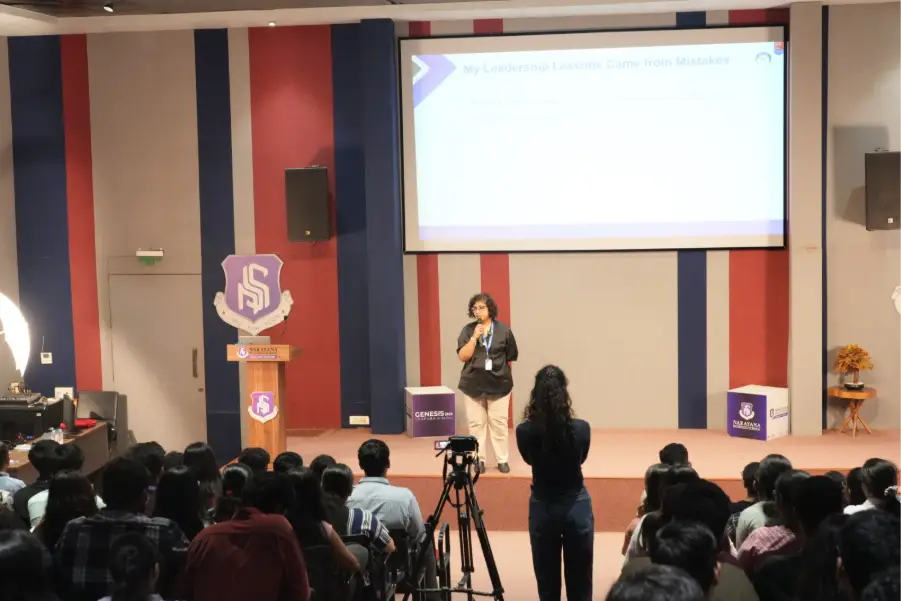
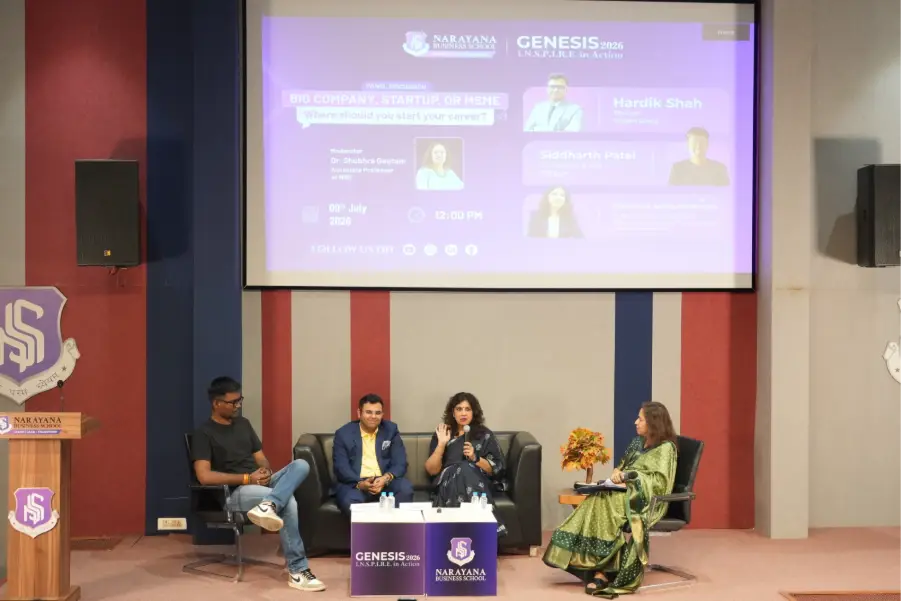
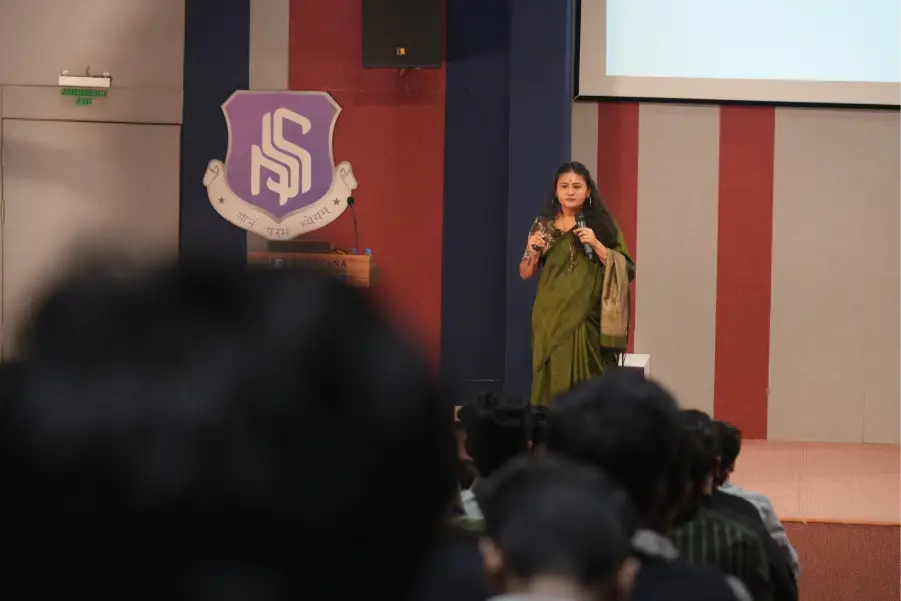
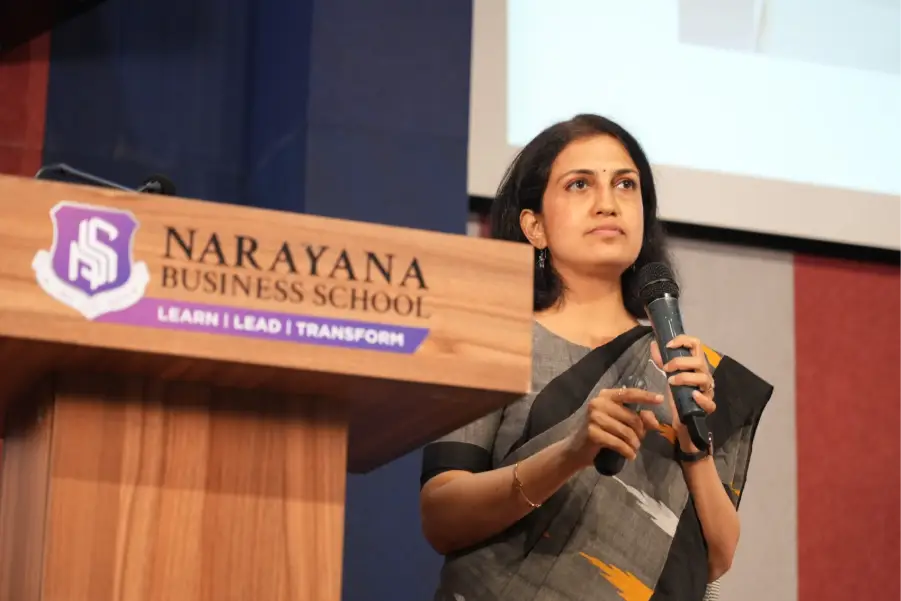
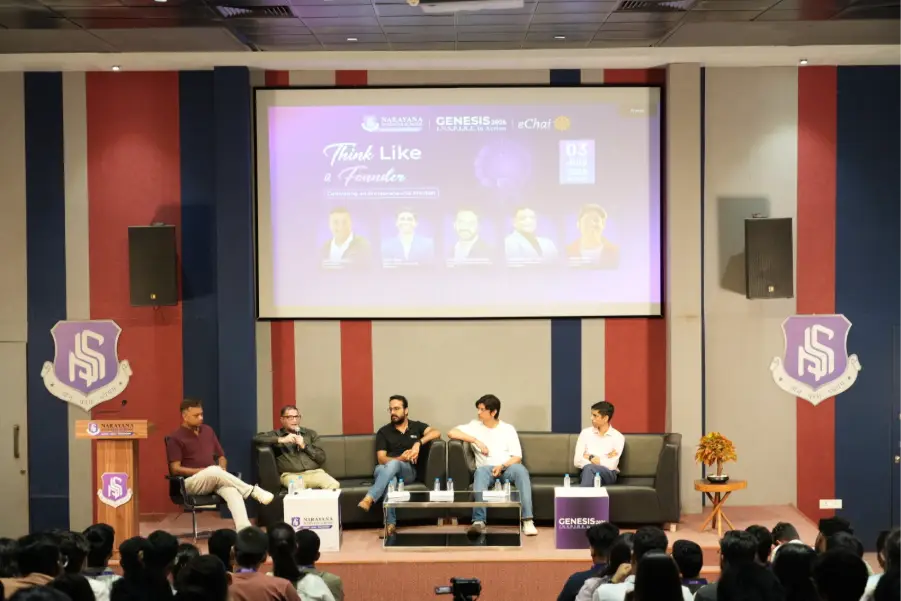
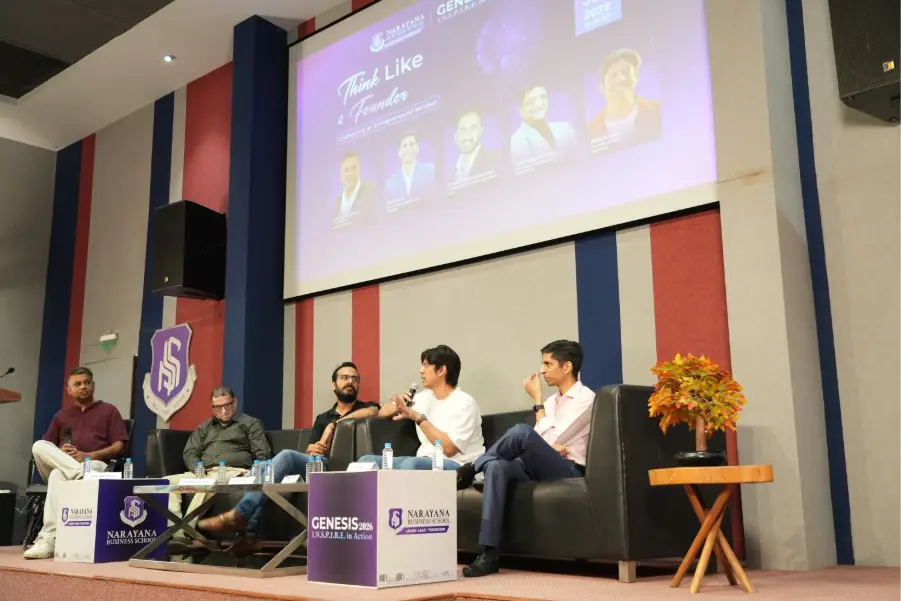
This idea formed the heart of the panel discussion, “Think Like A Founder: Cultivating An Entrepreneurial Mindset,” held in collaboration with eChai Ventures during GENESIS 2026 at Narayana Business School.
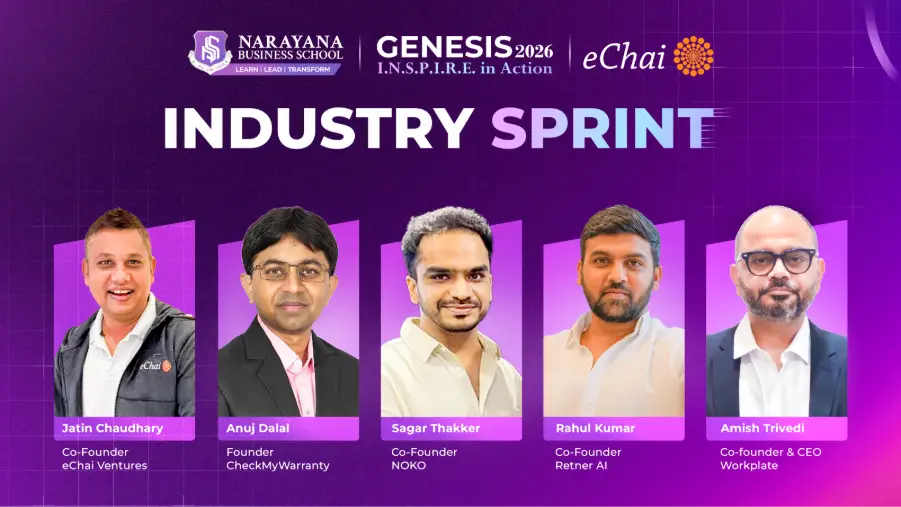
Bringing together entrepreneurs from different industries, the discussion featured Jatin Chaudhary of eChai Ventures, Sahil Shah from Petpooja, Umesh Uttamchandani of DevX, Syed Nadeem Jafri of HeartyMart, Khyati B. from Rocket, and Aditya Shah, Founder and CEO of Because. While each speaker had built a business in a different space, their journeys pointed towards the same lesson i.e., businesses succeed when they solve problems that people genuinely care about.
“One the inaugural day of Genesis 2026, we had Vatsal Shah, Founder of Pragmatic Consultancy speaking on what every MBA student must know before 2028 at Genesis”.
One of the biggest myths around entrepreneurship is that it starts with a great idea. The panel challenged this belief. An idea, by itself, has very little value if it doesn’t solve a real problem. Before building a product, investing money, or thinking about growth, founders must first understand the people they are trying to serve.
What are their challenges? What frustrates them? What are they willing to pay to solve? The answers to these questions matter far more than having an exciting business concept.
That is why validation came up repeatedly during the discussion. Many first-time entrepreneurs fall in love with their own ideas and spend months building products without knowing whether anyone actually needs them. The founders on the panel encouraged students to do the opposite. Start small, speak to customers, test your assumptions, gather feedback, and improve continuously. A simple pilot project or a basic version of a product often teaches more than months of planning.
The discussion also reminded students that entrepreneurship is rarely about having unlimited resources. Most successful businesses begin with limitations. Instead of waiting until everything is perfect, founders learn to work with what they have.
They outsource where needed, focus on their core strengths, and grow only when they know the business is ready. Building slowly is often more sustainable than growing quickly without direction.
Every panellist, in one way or another, highlighted the importance of practical exposure. Internships, startup projects, networking events, competitions, and conversations with founders expose students to challenges that no textbook can fully explain. These experiences teach people how businesses operate, how customers think, and how decisions are made when there are no perfect answers.
The conversation naturally moved towards artificial intelligence, a topic that is shaping almost every industry today. While the panel agreed that AI will continue to improve efficiency and change the way businesses function, they also believed that it should be seen as a tool rather than a replacement for human capability.
Another interesting perspective came from the founders who spoke about growth. From the outside, entrepreneurship often looks like a race to expand as quickly as possible. The discussion offered a different view. Sustainable businesses are built on strong fundamentals. Healthy cash flow, profitability, customer trust, and disciplined decision-making matter far more than chasing growth for the sake of appearances. Markets may celebrate rapid expansion, but businesses survive because they create consistent value over time.
This is perhaps one of the most important lessons for young entrepreneurs today. Social media often celebrates success stories without showing the years of learning, mistakes, and persistence behind them. The founders spoke honestly about adapting their business models, listening to customers, and changing direction whenever required. Flexibility, they suggested, is not a weakness. It is one of the biggest strengths an entrepreneur can develop.
Although the discussion focused on entrepreneurship, its lessons apply far beyond starting a business.
Perhaps that is the biggest takeaway from the session. Thinking like a founder is not about deciding to start a company after graduation. It is about becoming the kind of person who notices opportunities where others see obstacles, who asks better questions instead of accepting easy answers, and who remains curious enough to keep learning.
Businesses will continue to evolve. Technology will continue to change. Industries that exist today may look completely different a decade from now.
That journey does not begin with raising capital or launching a startup. It begins with a mindset, and like every mindset, it can be developed long before someone calls themselves an entrepreneur.
We thank the entire panel for coming together and stitching the dots for our students to understand and learn on “how to think like a founder” at Genesis 2026 I.N.S.P.I.R.E in Action.
Follow the Event here: https://www.linkedin.com/school/nbs-edu-in/