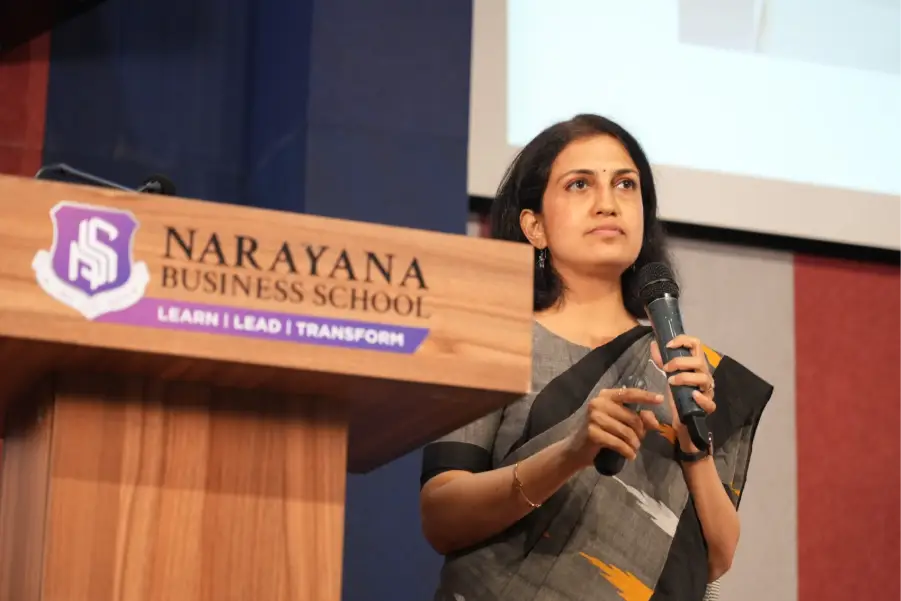




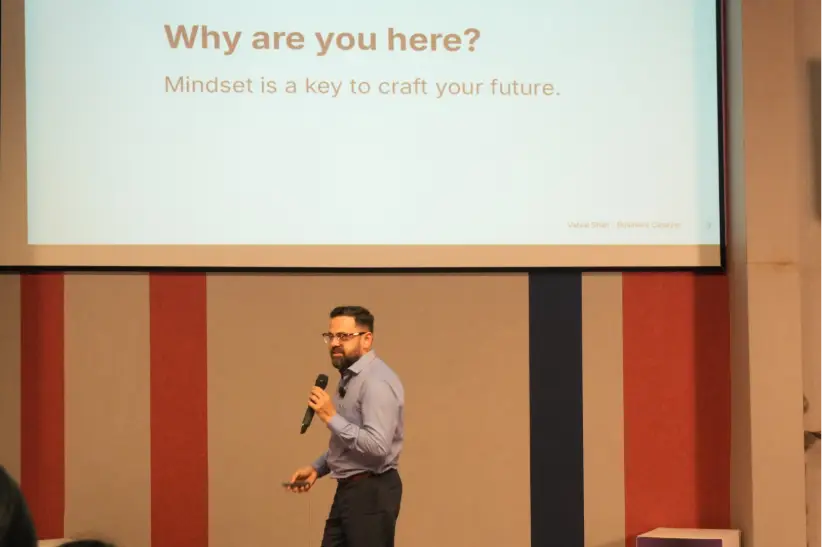
By the time today’s students graduate in 2028, the world they step into will look very different from the one they imagined when they first entered college. Artificial intelligence is no longer a futuristic idea; it is already changing how businesses operate, how teams work, and how companies hire. Jobs are evolving, new roles are emerging, and routine tasks are becoming increasingly automated.
In the middle of all this change, one question becomes more important than ever: What will make someone valuable in the years ahead?
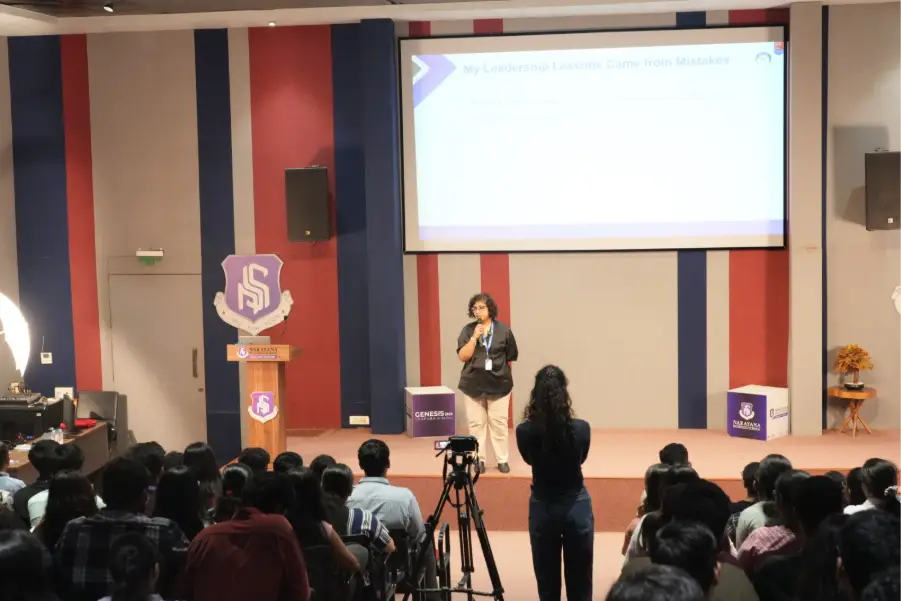
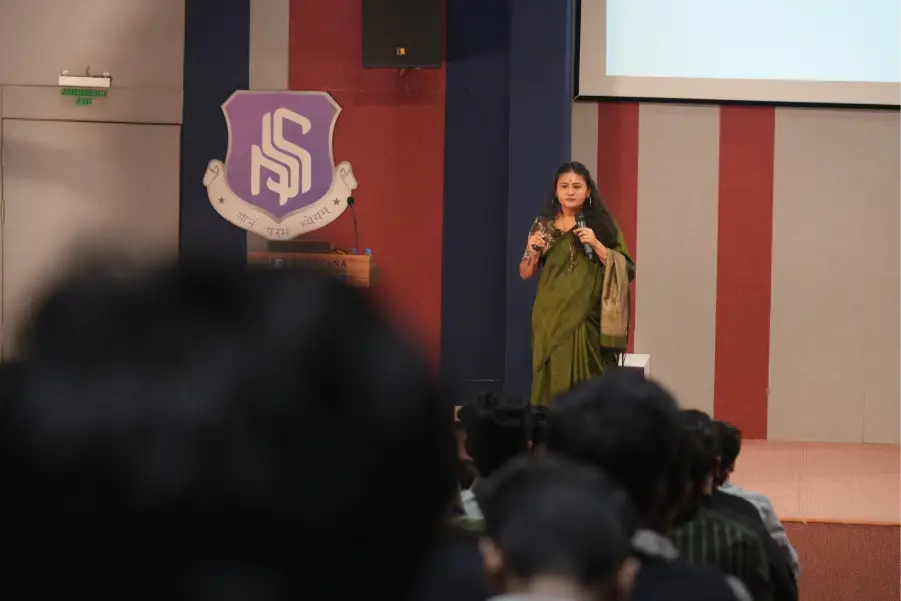
This was the question that shaped Vatsal Shah’s session, “2028 Calling: Prepare for the Real World,” at GENESIS 2026 at Narayana Business School.
Follow The Entire Event Here: https://www.linkedin.com/school/nbs-edu-in/
A Business Catalyst, CEO Coach, and Founder of Pragmatic Consultancy, Shah has spent more than two decades working closely with businesses across IT, digital, eCommerce, and retail, coaching over 200 CEOs and training more than 16,000 professionals. Instead of asking students to worry about the future, he encouraged them to understand it and prepare for it with the right mindset.
Shah summed it up in a single line: “People who can think and solve are the ones who will have careers. For the rest, I have AI.”
While the statement may sound blunt, it reflects a reality that is already taking shape. AI is becoming exceptionally good at handling repetitive work, analysing information, writing content, generating code, and completing tasks that once required hours of human effort. What it cannot replace is human judgement, curiosity, and the ability to understand why a problem exists in the first place. Businesses will always need people who can ask better questions, make decisions with incomplete information, and find solutions that create real impact.
Technology Cannot Replace Fundamentals – Vatsal Shah
At the same time, Shah cautioned students against assuming that AI makes learning less important. In fact, he argued the opposite. Technology can make work faster, but it cannot replace strong fundamentals. Whether someone wants to build a career in finance, marketing, operations, analytics, or technology, understanding the basics remains essential. AI can provide answers, but without conceptual clarity, it becomes difficult to judge whether those answers are useful, accurate, or relevant. The better a person’s fundamentals are, the more effectively they can use AI as a tool rather than becoming dependent on it.
As he put it, “You are at the age of exploration. Of 10 things you explore, 4 will fail, 3 will give moderate results, 2 will give good, but 1 will be your moonshot.”
There is an important lesson hidden in that thought. Failure is not the opposite of success; it is often the path that leads to it. Every internship, competition, project, conversation, or side hustle teaches something valuable, even when it doesn’t produce immediate results. The students who keep exploring are usually the ones who eventually find work that is meaningful because they have given themselves the chance to learn what they enjoy and where they can contribute the most.
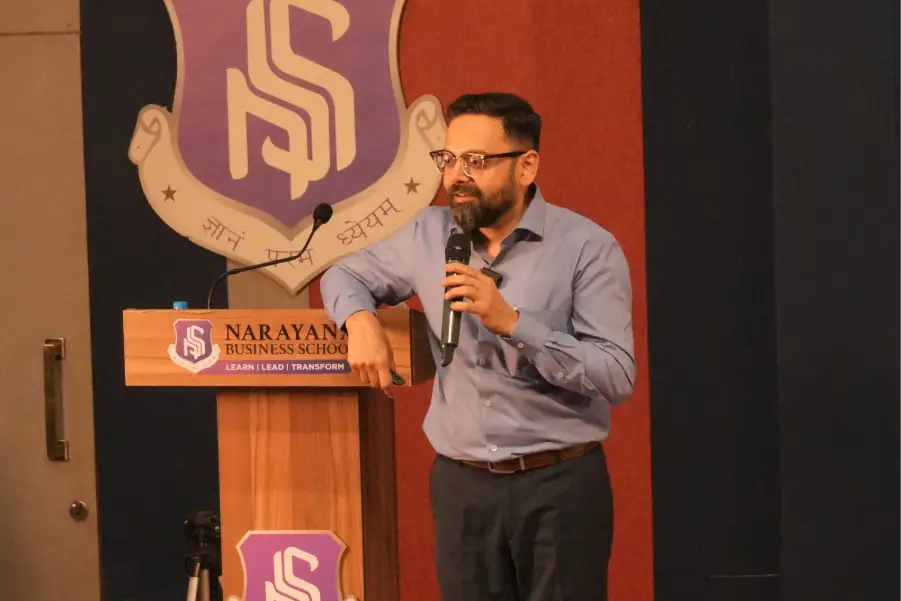
Preparing For The Real World: 2028
The session also challenged the way many young people think about careers. It is easy to choose a profession because it is popular or because it promises a high salary. Shah encouraged students to look beyond short-term rewards and think about where they can create long-term value. Industries will continue to change, technologies will evolve, and market demands will shift. Building a sustainable career, therefore, is less about chasing trends and more about developing skills that remain useful regardless of how the market changes. The ability to learn continuously, adapt to new situations, and solve meaningful business problems will always be in demand.
Mindset, according to Shah, plays an equally important role. Technical knowledge can open opportunities, but discipline, responsibility, and resilience determine whether a person can make the most of them. Careers are rarely shaped by one extraordinary achievement. They are shaped by everyday decisions—choosing to learn instead of procrastinating, taking ownership instead of making excuses, and staying consistent even when progress feels slow.
This idea was reflected in another one of his observations: “You are the outcome of choices you made.”
Shah also reminded the incoming batch of PGDM students 2026-28 that growth is not about becoming satisfied with being good. “Good is not good when better is possible,” he said, encouraging them to keep improving even after they achieve their initial goals.
Perhaps the most thought-provoking line from the session was, “You are walking towards death, not birth. We seed today for fruits tomorrow.” It was not a pessimistic statement but a reminder that time never stands still.
Conclusion: Vatsal Shah At Genesis 2026
As students prepare for 2028, the conversation can no longer be limited to placements, job titles, or salary packages. Those milestones matter, but they are outcomes, not the starting point. The real preparation begins much earlier by building strong fundamentals, embracing technology without becoming dependent on it, staying curious enough to keep learning, and developing the ability to solve problems that matter. The future will undoubtedly belong to AI in many ways.
But it will always have room for people who can think independently, understand people, take ownership, and create solutions that machines cannot. Preparing for that future does not begin after graduation. It begins with the choices students make today.