



It is easy to think of communication as something that matters only during interviews, presentations, or public speaking. In reality, it influences almost every interaction we have. It shapes how we build relationships, work with teams, resolve disagreements, earn trust, and even how people remember us. Two people may have the same knowledge, but the one who communicates it more clearly often creates the greater impact.
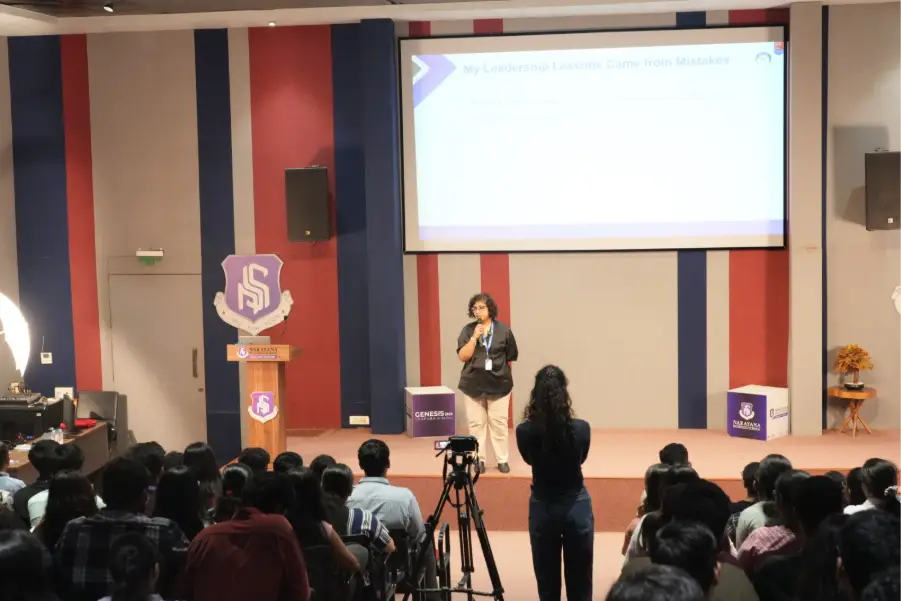
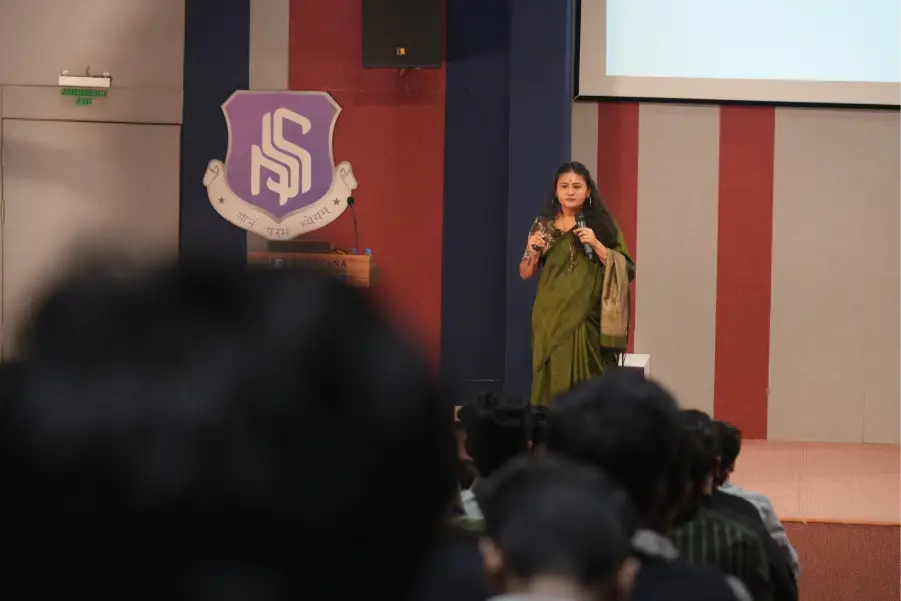
This was the central message of Saumya Das, Chief Psychologist, NLP Global Trainer, and Founder of COUNSELLATION INDIA , during her session dedicated to communication at GENESIS 2026 at Narayana Business School.
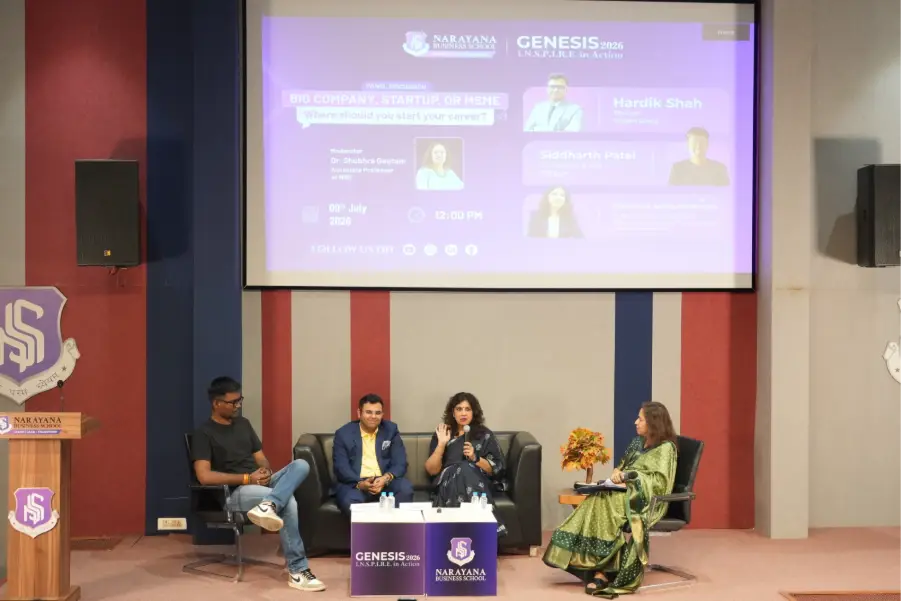
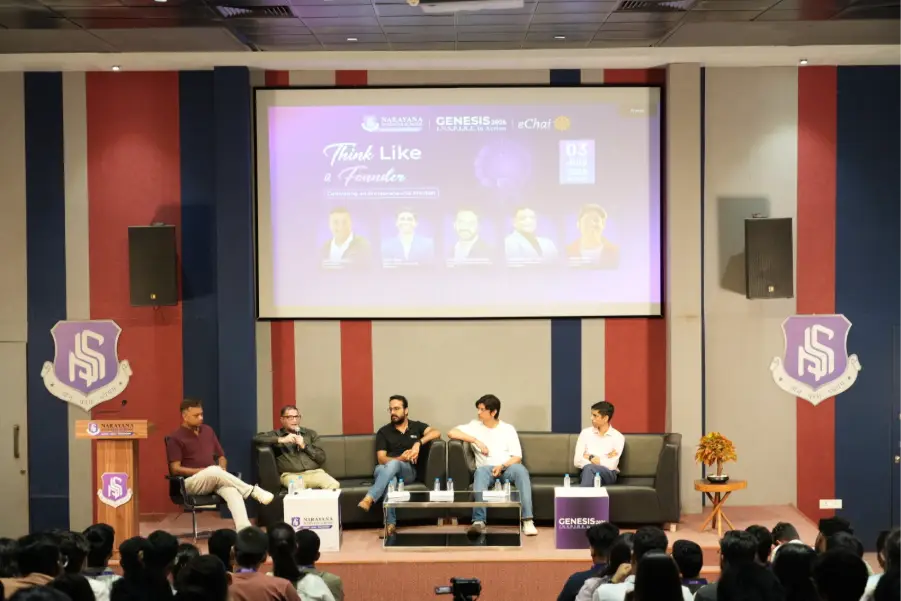
Genesis is a multi-day flagship orientation programme by Narayana Business School.
Follow the event here: https://www.linkedin.com/school/nbs-edu-in/
We were delighted to have her speak on the day of Genesis dedicated to skill development which was also one of the core values of I.N.S.P.I.R.E.
Rather than treating communication as a personality trait that some people naturally possess, she presented it as a skill that anyone can develop with awareness and practice. One of the first ideas she shared was surprisingly simple: before speaking, know why you are speaking.
Most conversations begin without much thought. We respond quickly, explain ourselves, or react emotionally without asking what we actually want to achieve. Saumya Das encouraged students to pause before important conversations and define their purpose. Are you sharing information? Are you making a request? Or are you trying to address a concern? When the purpose is clear, the conversation becomes clearer too.
This is one reason why misunderstandings happen so often. Many people focus on what they want to say instead of what they want the other person to understand.
As Saumya Das put it, “Communication is not just about expressing thoughts but also about creating understanding and removing misunderstandings.”
Why Two People Can Hear the Same Thing Differently
One of the most interesting parts of the session explored how our minds process information. Every second, our brain receives an enormous amount of information from the world around us, but only a very small part of it reaches our conscious attention. To make sense of everything, the brain filters information by deleting, distorting, and generalising what it experiences.
This explains why two people can witness the same situation and still walk away with completely different interpretations. Neither person is necessarily wrong. They are simply seeing the situation through different experiences, beliefs, and assumptions.
Understanding this makes communication more thoughtful. Instead of assuming that everyone thinks the way we do, we become more willing to ask questions, clarify our message, and listen without rushing to conclusions.
Communication Is Also About Energy
Another idea that stood out during the session was that “Communication is an exchange of energy.”
Long before people remember our exact words, they notice our tone, pace, confidence, and body language. They sense whether we are genuinely interested in the conversation or simply waiting for our turn to speak.
This is why building rapport matters. Saumya Das explained how simple things such as matching the other person’s pace, tone, communication style, or level of energy can make conversations feel more natural. It is not about copying someone or pretending to be someone else. It is about making the other person feel comfortable enough to engage openly.
Whether it is a classroom discussion, an interview, a networking event, or a workplace meeting, people connect more easily when they feel understood.
The Conversation We Have With Ourselves
Perhaps the most unexpected lesson from the session was that good communication begins long before we start talking to someone else. The way we speak to ourselves influences the way we speak to the world. If our inner voice is constantly filled with doubt, fear, or self-criticism, it often shows in our confidence, body language, and interactions with others. On the other hand, when we develop a healthier internal dialogue, we naturally become calmer, clearer, and more confident in our communication.
This is why communication is not only an external skill. It is also an internal one.
As she said, “The quality of your communication determines the quality of your life.” While this may sound like a bold statement, it becomes easier to understand when we think about how many opportunities begin with a conversation. Friendships, internships, placements, mentorships, partnerships, and leadership opportunities all depend, in some way, on our ability to communicate with clarity and confidence.
In Conclusion, It Is A Skill That Grows With Practice
Communication is often mistaken for talent. Some people appear to speak effortlessly, while others struggle to express themselves. But like every other skill, communication improves through observation and practice.
Every presentation, every group discussion, every difficult conversation, and every interview becomes an opportunity to improve. The goal is not to sound perfect. The goal is to become clearer, more thoughtful, and more aware of the people we are speaking to.
For students preparing to enter the professional world, technical knowledge will always matter. But knowledge creates value only when it can be understood, shared, and acted upon.
We extend our heartfelt thanks to Saumya Das for agreeing to do this with our students.