



Should I join a startup, a corporate, or an MSME?
Some students dream of working for a global company with a recognised brand. Others are excited by the fast-paced world of startups, where every day brings a new challenge. Many overlook MSMEs entirely, even though they make up the backbone of India’s economy and often provide experiences that are difficult to find elsewhere.
Most students try to answer this question by comparing salaries, company names, or what their friends are choosing. While these factors matter, they rarely tell the complete story. The right first job is not simply the one that pays the most or looks impressive on LinkedIn. It is the one that helps you become the professional you want to be.
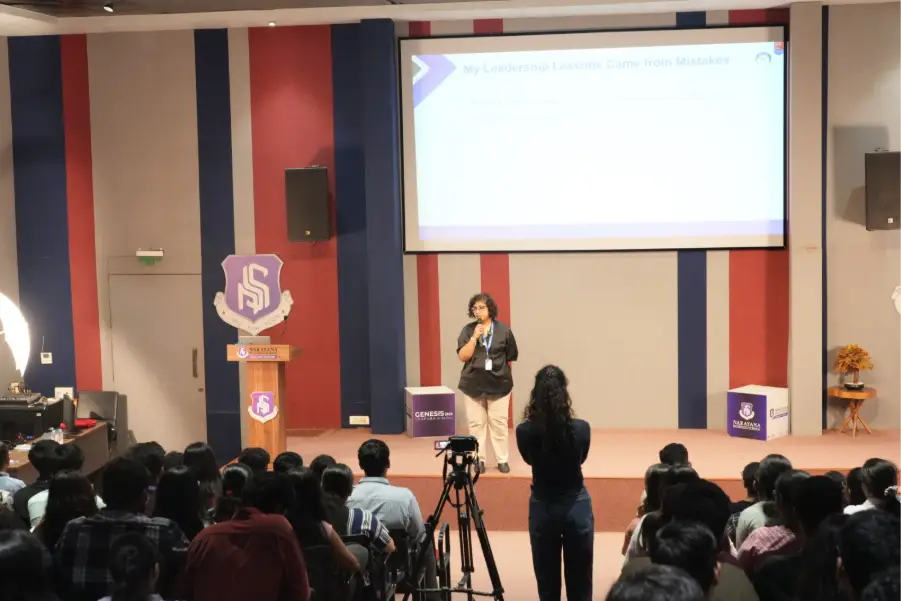
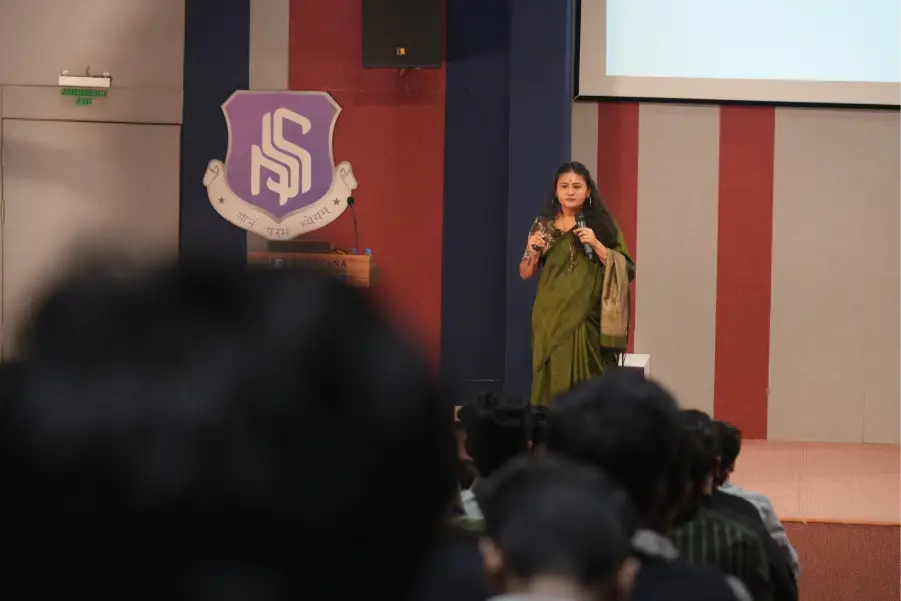
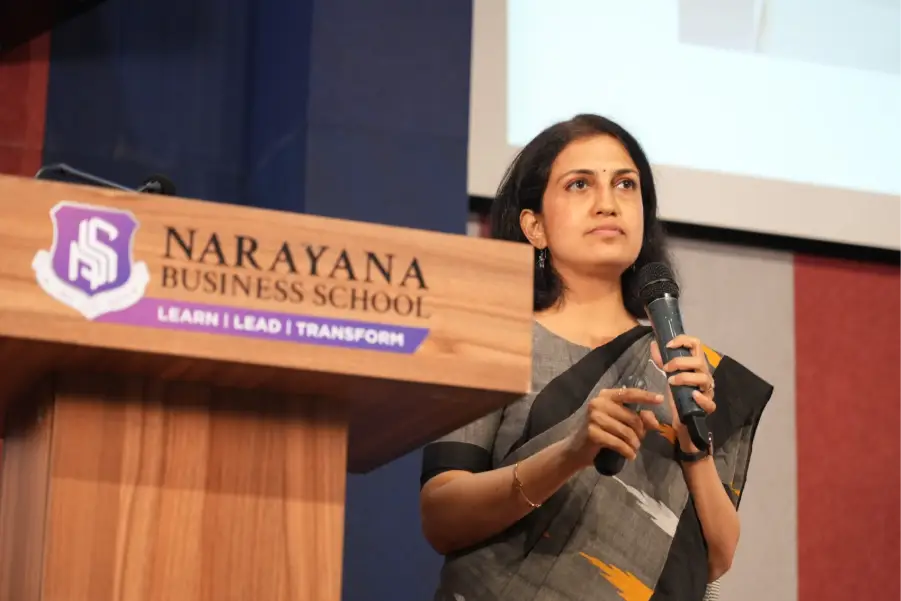
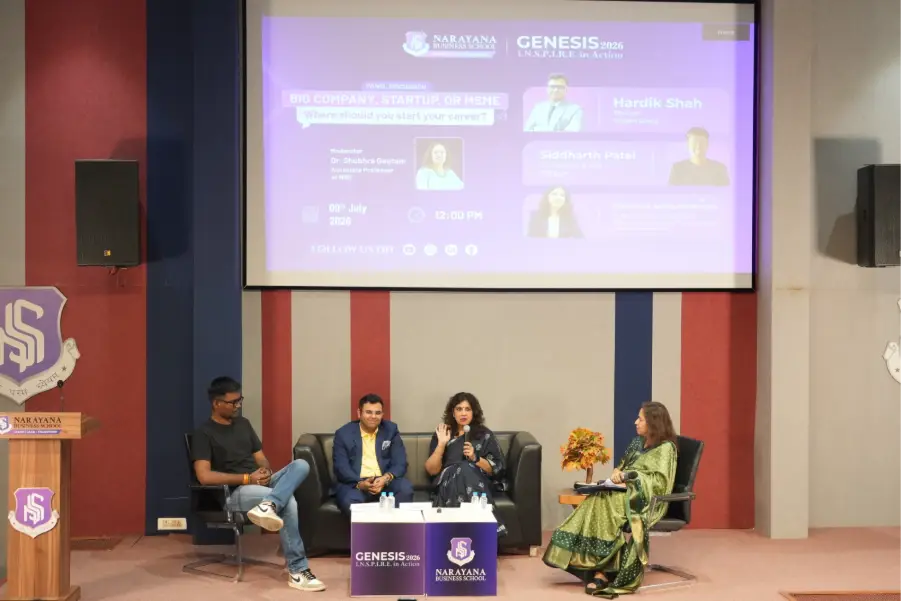
This was the focus of an engaging panel discussion at GENESIS 2026 titled “Big Company, Startup or MSME: Where Should Students Start Their Careers?”
Moderated by Dr. Shubhra Gautam, Associate Professor at Narayana Business School, the discussion brought together Hardik Shah, Director at Shyam Group, Siddharth Patel, Co-founder and CEO of Diggiple, and Prarthana Sethumadhavan, Strategic Advisor – Leadership, Talent and Organisational Transformation at Sakalya HR Solutions. Instead of debating which option was better, the panel helped students understand a much more important truth: there is no single career path that suits everyone.
Why Your First Job Matters
Students often believe that their first job will determine the rest of their career. While that may sound dramatic, there is some truth behind it.
Your first workplace introduces you to professional life. It teaches you how organisations function, how teams collaborate, how decisions are made, and how problems are solved. More importantly, it shapes your habits. The way you communicate, take ownership, work under pressure, and learn from others is often influenced by your early experiences.
That does not mean choosing one organisation closes every other door. People switch industries, roles, and companies throughout their careers. However, the first few years play an important role in building confidence, practical skills, and professional maturity. That is why the decision deserves careful thought.
Instead of asking, “Which company pays more?”, students should ask a better question: “Which organisation will help me learn the most over the next three years?”
Startups Vs Corporates Vs MSMEs Reddit
Many career discussions reduce the choice to startups versus corporates. In reality, MSMEs deserve equal attention because they offer a very different learning experience.
Large corporates are known for structure. Roles are clearly defined, processes are well established, and employees usually receive formal training. Freshers benefit from working with experienced professionals, understanding industry standards, and learning how large organisations manage operations at scale. Career progression is often systematic, making corporates attractive for people who appreciate stability and well-defined responsibilities.
Startups operate differently. Teams are smaller, resources are limited, and priorities change quickly. Employees are expected to solve problems beyond their job descriptions and often work directly with founders and senior leaders. This creates an environment where learning happens rapidly because people are constantly exposed to new challenges. The trade-off is that startups also involve greater uncertainty, changing priorities, and higher expectations.
MSMEs offer something unique. Because organisations are lean, employees are rarely confined to one function. A marketing executive may also learn sales, operations, customer service, and business development. Decisions are taken faster, access to leadership is easier, and employees gain a broader understanding of how businesses actually run. For students who enjoy learning across functions, this exposure can become one of the biggest advantages of starting in an MSME.
None of these environments is inherently better than the others. Each develops professionals in different ways.
How to Evaluate a Company Before Accepting an Offer
Finding a job requires preparation. Choosing the right job requires research. The panel encouraged students to conduct proper due diligence before accepting any offer, particularly from startups and smaller organisations. Every interview should be viewed as a two-way conversation. While employers assess candidates, candidates should also assess employers.
Before accepting an offer, students should try to understand the company’s business model, leadership team, financial stability, growth plans, organisational culture, and learning opportunities. Speaking to current employees, reading about the company, exploring its products or services, and understanding its long-term vision can help students make more informed decisions.
Many graduates spend months preparing for interviews but only a few minutes evaluating the organisation they are about to join. Considering that people spend a significant part of their lives at work, that balance should probably be reversed.
Build Skills That Stay Valuable Everywhere
Although the discussion focused on different types of organisations, the panel repeatedly returned to one important idea. Long-term career success depends less on where you work and more on the skills you build.
Technical knowledge opens doors, but communication, adaptability, problem-solving, integrity, and curiosity determine how far professionals grow after entering those doors.
The panel also spoke about developing T-shaped skills. This means becoming deeply knowledgeable in one area while also understanding related business functions. For example, a marketing professional who understands finance, operations, customer behaviour, and technology are often able to make better decisions than someone who works within a narrow functional boundary.
Businesses increasingly value professionals who understand the bigger picture rather than only their own responsibilities.
AI Will Change Work, Not the Need for Human Skills
Artificial intelligence naturally became part of the discussion because it is influencing every industry.
The panel encouraged students to see AI as a productivity tool rather than a replacement for professional capability. AI can analyse information, automate repetitive work, and improve efficiency. However, it still depends on people to ask the right questions, make ethical decisions, understand customer needs, communicate ideas, and exercise judgement.
The professionals who thrive over the next decade will not be those who compete against AI. They will be the ones who learn how to work alongside it while continuing to strengthen the uniquely human skills that technology cannot replace.
The Best Career Decision Is a Personal One
Perhaps the most valuable insight from the panel was that career choices should never be driven entirely by market trends or public perception.
Every year, certain industries become fashionable. Salaries rise in one sector, startups attract attention in another, and large corporates continue to appeal because of their reputation. While these trends influence conversations, they should not replace personal reflection.
A successful career is built by people who understand their own strengths, remain curious, continue learning, and choose environments that help them grow. Integrity, adaptability, communication, and a willingness to take ownership remain valuable whether someone works in a multinational corporation, a rapidly growing startup, or a family-owned MSME.
The question, therefore, is not whether startups are better than corporates or whether MSMEs provide greater exposure. Each environment offers its own advantages, challenges, and learning opportunities.